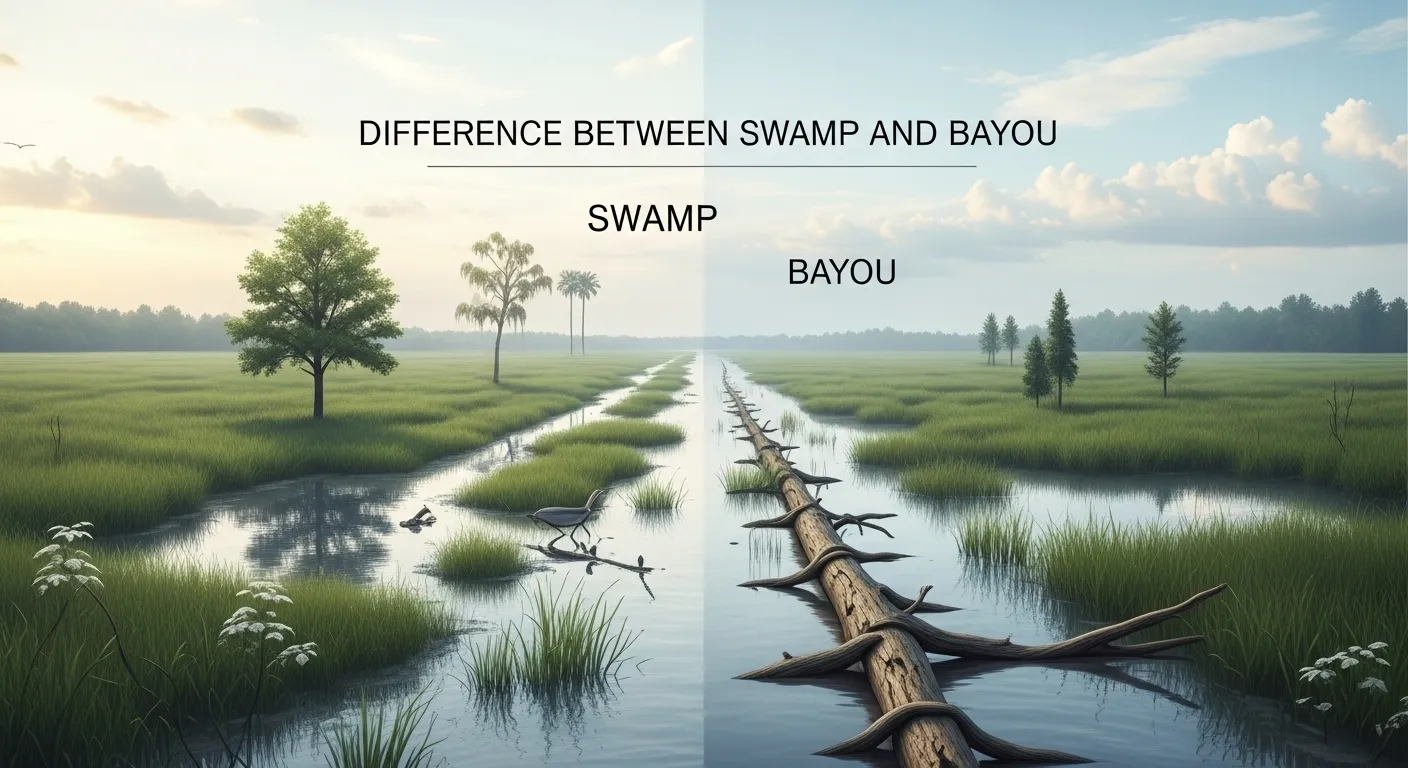
Wetlands are fascinating ecosystems, and two common types are swamps and bayous. While they may appear similar, swamps and bayous have distinct characteristics, water flow, vegetation, and wildlife. For example, swamps are often forested wetlands with standing water, while bayous are slow-moving, often marshy waterways typically found in low-lying areas. Understanding the difference between swamp and bayou is essential for ecologists, nature enthusiasts, and travelers exploring wetlands. Knowing these distinctions also helps in conservation efforts, land management, and appreciating the unique beauty of these habitats.
Pronunciation
- Swamp: US /swɑːmp/, UK /swɒmp/
- Bayou: US /ˈbaɪ.uː/, UK /ˈbaɪ.uː/
Linking Hook: Let’s explore the main differences between swamp and bayou to better understand these unique wetland ecosystems.
Difference Between Swamp and Bayou
1. Definition
- Swamp: A wetland dominated by trees and standing water.
- Example 1: The Okefenokee Swamp in Georgia has vast cypress forests.
- Example 2: Florida Everglades feature swampy areas with diverse wildlife.
- Bayou: A slow-moving or stagnant body of water, often connected to a river or lake.
- Example 1: Louisiana bayous meander through lowlands and marshes.
- Example 2: Bayous often serve as habitats for alligators and fish.
2. Water Flow
- Swamp: Mostly stagnant or slow-moving water.
- Example 1: Swamp pools remain in place after rain.
- Example 2: Flooded forest areas have little water movement.
- Bayou: Slow-flowing water, sometimes tidal or river-fed.
- Example 1: Bayou channels flow gently toward larger rivers.
- Example 2: Water currents in bayous are noticeable but mild.
3. Vegetation
- Swamp: Dominated by trees like cypress, tupelo, and mangroves.
- Example 1: Cypress knees rise above swamp water.
- Example 2: Mangrove swamps protect coastal areas.
- Bayou: Marshy vegetation, grasses, shrubs, and scattered trees.
- Example 1: Bayou shores often have reeds and cattails.
- Example 2: Bald cypress can appear sporadically along bayou banks.
4. Geography
- Swamp: Found inland or along rivers, often in low-lying areas.
- Example 1: Okefenokee Swamp spans Georgia and Florida.
- Example 2: Great Dismal Swamp in Virginia and North Carolina.
- Bayou: Common in Louisiana, Mississippi, and Gulf Coast regions.
- Example 1: Bayous are integral to southern Louisiana landscapes.
- Example 2: Bayou Teche winds through Acadiana, Louisiana.
5. Wildlife
- Swamp: Supports alligators, snakes, amphibians, birds, and fish.
- Example 1: Swamps provide nesting grounds for herons.
- Example 2: Frogs and turtles thrive in swamp water.
- Bayou: Home to fish, crawfish, alligators, and wading birds.
- Example 1: Bayou waters support catfish and bass.
- Example 2: American alligators are commonly seen in bayous.
6. Soil Type
- Swamp: Waterlogged, nutrient-rich, mucky soil.
- Example 1: Swamp forests grow on thick peat or muck.
- Example 2: Soil retains water for long periods.
- Bayou: Soft, marshy, often silty or sandy soil.
- Example 1: Bayou banks have sediment deposited by rivers.
- Example 2: Soft mud supports marsh grasses.
7. Formation
- Swamp: Forms from flooding, poor drainage, or river overflows.
- Example 1: Seasonal floods create cypress swamps.
- Example 2: Coastal swamps form in low-lying areas with rain accumulation.
- Bayou: Typically develops from slow-moving rivers or streams.
- Example 1: Bayou forms where water meanders and deposits sediment.
- Example 2: Tidal bayous are influenced by sea-level changes.
8. Human Use
- Swamp: Conservation, wildlife habitat, and eco-tourism.
- Example 1: Guided swamp tours in Florida Everglades.
- Example 2: Swamp preserves protect endangered species.
- Bayou: Fishing, boating, tourism, and some agriculture.
- Example 1: Bayou tours in Cajun Louisiana.
- Example 2: Bayou waters support rice cultivation in lowlands.
9. Cultural Significance
- Swamp: Often considered mysterious or foreboding in folklore.
- Example 1: Swamps feature in ghost stories and local legends.
- Example 2: Swamps inspire myths about hidden creatures.
- Bayou: Central to Cajun and Creole culture, music, and lifestyle.
- Example 1: Jazz and zydeco music emerged around bayou communities.
- Example 2: Bayous host local festivals celebrating heritage.
10. Accessibility
- Swamp: Often difficult to navigate due to dense vegetation and water.
- Example 1: Swamp tours require airboats or guided paths.
- Example 2: Dense forests make swamps hard to explore.
- Bayou: Easier to traverse via small boats or canoes.
- Example 1: Canoe trips along bayous are common.
- Example 2: Fishing and sightseeing are more accessible.
Nature and Behaviour
- Swamp: Forested wetland, stagnant water, dense vegetation, high biodiversity.
- Bayou: Slow-moving waterway, marshy banks, adaptable wildlife, cultural hub.
Why People Are Confused
Swamps and bayous both have water, lush vegetation, and southern U.S. association, leading to misconceptions. Swamps are tree-dominated wetlands, while bayous are slow-moving channels.
Table: Difference and Similarity
| Feature | Swamp | Bayou | Similarity |
| Water Flow | Mostly stagnant | Slow-moving | Both are wetland ecosystems |
| Vegetation | Trees like cypress & mangroves | Grasses, shrubs, scattered trees | Both support wildlife |
| Location | Inland or riversides | Gulf Coast, Louisiana, Mississippi | Both in low-lying areas |
| Wildlife | Amphibians, birds, reptiles | Fish, crawfish, alligators | Both have diverse species |
| Human Interaction | Eco-tourism, conservation | Fishing, boating, cultural use | Both attract visitors |
Which is Better in What Situation?
Swamps are better for conservation, research, and exploring dense ecosystems. Bayous are better for recreational activities, cultural experiences, and water-based travel. Each has unique ecological and cultural importance.
Use in Metaphors and Similes
- Swamp: “The debate became a swamp, thick and difficult to navigate.”
- Bayou: “Ideas flowed like a slow bayou, winding but steady.”
Connotative Meaning
- Swamp: Neutral to negative; often associated with difficulty or mystery.
- Bayou: Positive; associated with culture, relaxation, and natural beauty.
Idioms or Proverbs
- “Up to your neck in the swamp” – implies being in a difficult situation.
- “Slow as a bayou” – refers to gentle, unhurried pace.
Literature & Movies
- Swamplandia! (Novel, Karen Russell, 2011) – fiction, adventure in swamp.
- The Bayou (Documentary, 2013, USA) – explores Louisiana bayous and culture.
- Where the Crawdads Sing (Novel, Delia Owens, 2018) – set in North Carolina swamps.
FAQs
1. Can a bayou be part of a swamp?
Yes, bayous can flow through swampy regions.
2. Are swamps dangerous?
Some swamps may contain wildlife hazards or unstable ground.
3. Is a bayou always freshwater?
Not always; some are tidal or brackish.
4. What animals live in swamps and bayous?
Swamps: alligators, turtles, birds. Bayous: fish, crawfish, alligators.
5. Can humans live near swamps or bayous?
Yes, but communities often adapt to flooding and wet conditions.
How Both Are Useful for Surroundings
Swamps filter water, support biodiversity, and prevent flooding. Bayous provide fisheries, cultural value, and slow water drainage. Both are vital for ecosystem balance and human livelihoods.
Final Words
Swamps and bayous are unique wetlands, each with distinct ecological and cultural significance. Knowing their differences ensures better understanding, conservation, and appreciation.
Conclusion
Swamps are tree-dominated, waterlogged wetlands with high biodiversity, while bayous are slow-moving waterways often tied to culture and recreation. Both ecosystems are essential for environmental balance, wildlife habitat, and human use. Recognizing the difference helps ecologists, travelers, and nature enthusiasts appreciate the unique roles each wetland plays in our environment.