Skin problems can be confusing, especially when they look similar. Many people see red, itchy patches on their skin and wonder, “Is this hives or eczema?” This confusion is very common.
Both conditions can cause itching and discomfort. Both can appear suddenly. Because of this, people often mix them up. But knowing the difference between hives and eczema is very important.
The cause, treatment, and care for each condition are not the same. Using the wrong treatment can make things worse.
In this simple guide, you will learn what hives and eczema are, how they look, what causes them, and how to tell them apart easily.
Featured Snippet
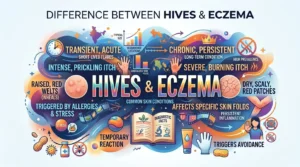
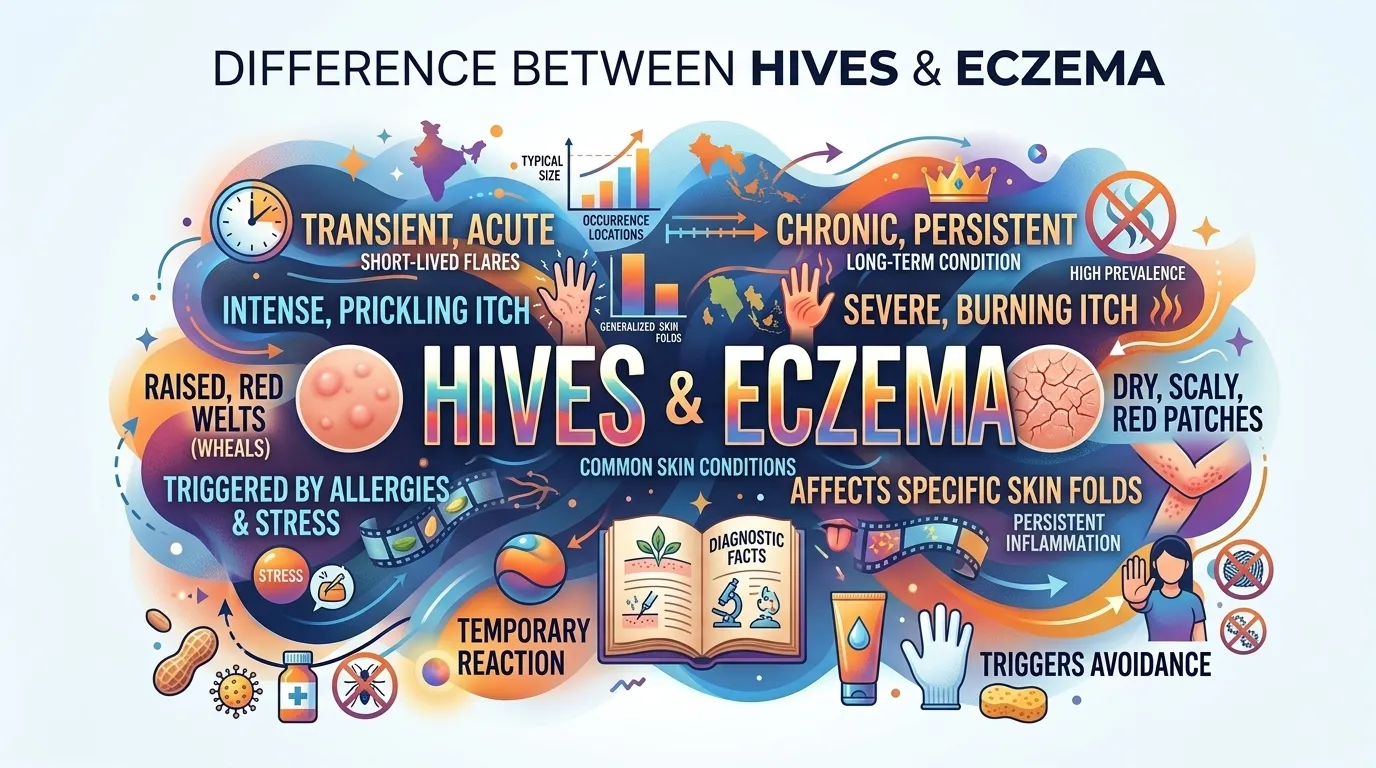
The main difference between hives and eczema is how they appear and behave. Hives are raised, itchy bumps that appear suddenly and fade quickly. Eczema is a long-term skin condition with dry, itchy, and inflamed patches that last longer.
What are hives?
Hives is a skin reaction.
It is also called Urticaria.
Hives appear as raised, red, itchy bumps on the skin. They can come and go quickly.
They often happen due to an allergic reaction.
Simple Example
You eat something new. After some time, red itchy bumps appear on your skin. This could be hives.
Basic Features of Hives
- Raised bumps or welts
- Very itchy
- Appear suddenly
- Fade within hours or a day
- Often caused by allergies
What Is Eczema?
Eczema is a long-term skin condition.
It is also called Atopic Dermatitis.
It causes dry, red, and itchy patches on the skin.
Eczema can last for a long time and may come back again and again.
Simple Example
A child has dry, itchy skin on the arms for weeks. This may be eczema.
Basic Features of Eczema
- Dry and rough skin
- Red patches
- Long-lasting condition
- Can flare up often
- Not always caused by allergies
Difference Between Hives and Eczema
Here is a simple comparison table:
| Feature | Hives | Eczema |
| Medical Name | Urticaria | Atopic Dermatitis |
| Appearance | Raised bumps | Dry, rough patches |
| Duration | Short (hours to days) | Long-term (weeks or more) |
| Cause | Often allergy | Many causes (skin, genetics) |
| Itching | Intense itching | Constant itching |
| Skin Texture | Smooth bumps | Dry and cracked |
| Recurrence | Comes and goes quickly | Repeats over time |
| Swelling | Common | Less common |
Key Differences Explained
Appearance
Hives look like raised bumps.
Eczema looks like dry, rough patches.
Example:
Hives may look like mosquito bites.
Eczema looks like dry skin areas.
Duration
Hives disappear quickly.
Eczema lasts longer.
Example:
Hives may go away in a day.
Eczema may last for weeks.
Cause
Allergies often cause hives.
Eczema can have many causes, such as dry skin, weather, or genetics.
Itching
Both itch, but in different ways.
Hives cause sudden, strong itching.
Eczema causes long-term itching.
Skin Condition
Hive’s skin looks swollen.
Eczema skin looks dry and cracked.
Examples
Here are simple real-life examples:
Example 1: Food Reaction
You eat peanuts and get red bumps quickly.
This is likely hives.
Example 2: Dry Skin Problem
You have itchy, dry skin for weeks in winter.
This is likely eczema.
Example 3: Allergy Trigger
A new soap causes bumps on your skin.
This may be hives.
Example 4: Long-Term Skin Issue
A child keeps scratching dry patches daily.
This is eczema.
Importance of Knowing the Difference
Knowing the difference helps you get the right treatment.
It helps you avoid triggers.
It prevents the condition from getting worse.
For example, treating eczema like hives may not work.
Correct understanding leads to better care.
Benefits of Understanding Hives vs Eczema
- Helps in quick identification
- Improves treatment choice
- Reduces skin damage
- Avoids wrong medicines
- Helps manage symptoms better
- Saves time and stress
- Improves skin health
Common Mistakes People Make
Mistake 1: Thinking Both Are the Same
They are different conditions.
Mistake 2: Ignoring Duration
Short-term rash is often hives. Long-term is eczema.
Mistake 3: Using the Wrong Creams
Different conditions need different treatments.
Mistake 4: Not Checking Triggers
Hives often have clear triggers like food.
Real-Life Use
When Hives Occur
- Food allergies
- Medicine reactions
- Insect bites
When Eczema Occurs
- Dry weather
- Sensitive skin
- Family history
Who Gets Them?
- Hives can affect anyone suddenly
- Eczema is common in children
Easy Trick to Remember the Difference
Here is a simple trick:
Hives = Happens fast
Eczema = Exists longer
This helps you remember easily.
Which One Is Better?
This is not about better or worse.
Both are health conditions.
The goal is to manage them well.
- Hives need quick treatment
- Eczema needs long-term care
Understanding the condition helps you handle it properly.
FAQs
1. What is the main difference between hives and eczema?
Hives are sudden, raised bumps that fade quickly. Eczema is long-term, dry, and itchy skin.
2. Are hives and eczema the same?
No, they are different skin conditions.
3. Which one is more serious?
Both can be serious depending on the case. Eczema is long-term, while hives can be sudden.
4. Can allergies cause both?
Yes, but hives are more directly linked to allergies.
5. Do hives last longer than eczema?
No, hives are short-term. Eczema lasts longer.
6. Can children get eczema?
Yes, eczema is very common in children.
7. How can I tell them apart quickly?
If it appears fast and fades fast, it is hives. If it stays long, it is eczema.
Conclusion
Understanding the difference between hives and eczema helps you take better care of your skin.
Hives are sudden, raised, and short-term. They often come from allergies and go away quickly. Eczema is dry, itchy, and long-lasting. It needs ongoing care.
The key difference is time and appearance. Hives come and go fast. Eczema stays and may return often.
If you notice skin problems, pay attention to how long they last and how they look. This will help you identify the condition correctly.
With the right knowledge, you can manage both conditions better and keep your skin healthy.