Many people hear the words Anglican and Episcopal and feel confused. They sound different, but they are closely related. You may hear them in church, history, or conversations about Christianity. This makes people ask, “Are they the same or different?”
Understanding the difference between Anglican and Episcopal is helpful, especially if you are learning about Christian groups or visiting a church.
The truth is simple. These terms are connected, but they are used in different ways and places. One is a global tradition, and the other is a specific church.
In this guide, you will learn what Anglican and Episcopal mean, how they are related, and how they differ in simple, easy words.
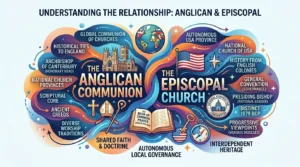
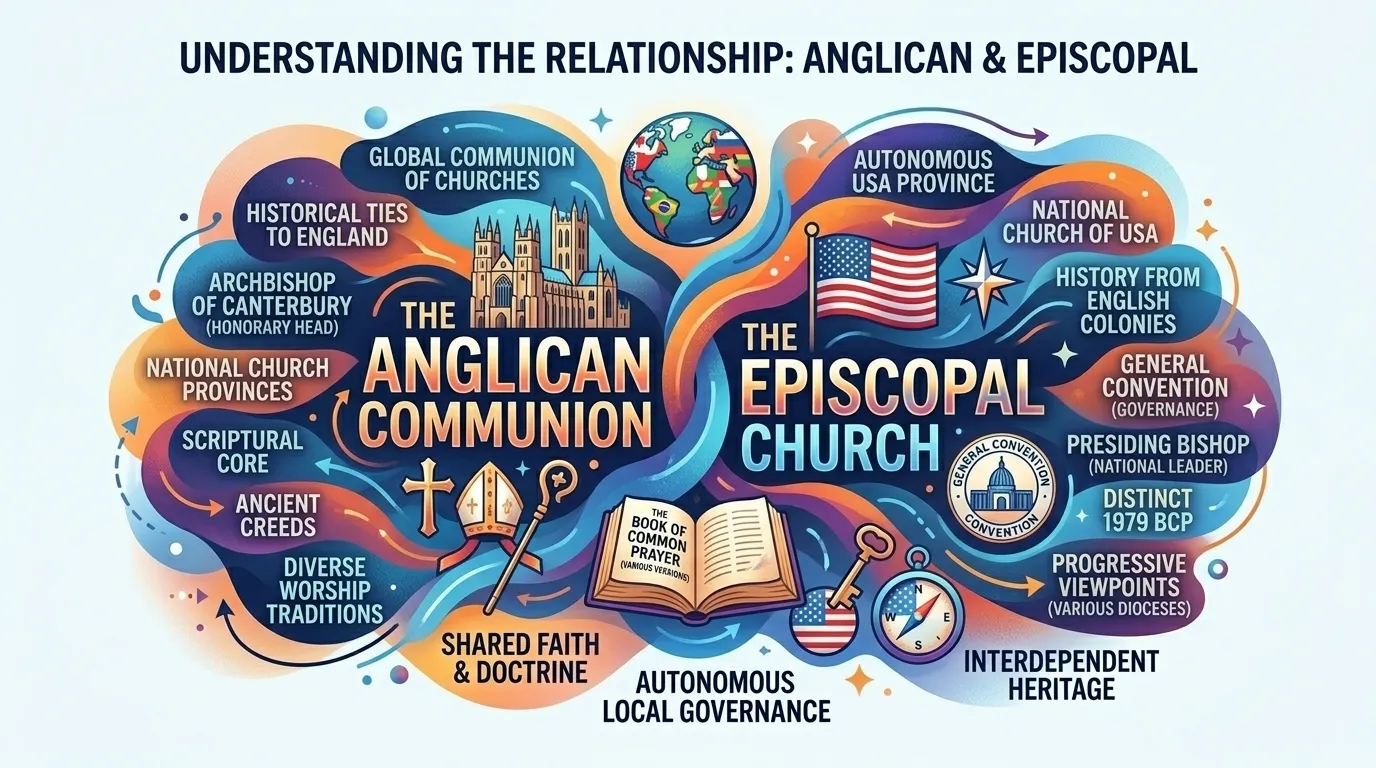
The main difference between Anglican and Episcopal is scope. Anglican refers to a worldwide Christian tradition and group of churches. Episcopal refers to a specific branch of that tradition, mainly in the United States.
What Is Anglican?
Anglican refers to a group of Christian churches around the world.
This group is called the Anglican Communion.
It started from the Church of England. Today, it includes many churches in different countries.
Anglican churches share similar beliefs, worship styles, and traditions.
Simple Example
A church in England or Nigeria that follows Anglican traditions is part of the Anglican Communion.
Basic Features of Anglican
- Global group of churches
- Based on the Church of England’s roots
- Shared beliefs and practices
- Found in many countries
- Includes many local churches
What Is Episcopal?
Episcopal refers to a specific church.
It usually means the Episcopal Church.
This church is part of the Anglican Communion but is mainly based in the United States.
The word “Episcopal” relates to a style of church leadership with bishops.
Simple Example
A church in the United States that follows Anglican traditions is often called Episcopal.
Basic Features of Episcopal
- A specific church in the United States
- Part of the Anglican Communion
- Uses bishops for leadership
- Follows Anglican beliefs
- Local name for the Anglican tradition in the US
Difference Between Anglican and Episcopal
Here is a simple comparison table:
| Feature | Anglican | Episcopal |
| Meaning | Global Christian tradition | Specific church |
| Scope | Worldwide | American branch of the Anglican |
| Structure | Many churches | One national church |
| Origin | Church of England | American branch of Anglican |
| Use of Term | General/global term | Local/national term |
| Leadership | Bishops and clergy | Bishops and clergy |
| Beliefs | Shared across churches | Same Anglican beliefs |
Key Differences Explained
Scope
Anglican is a global term.
Episcopal is a local term.
Example:
Anglican includes churches worldwide. Episcopal mainly refers to the US church.
Usage of Name
Different countries use different names.
Some use Anglican. The US uses Episcopal.
Example:
In England, people say Anglican. In the US, people say Episcopal.
Structure
Anglicanism is a group of many churches.
Episcopal is one of those churches.
Identity
Anglican is like a family.
Episcopal is one member of that family.
Examples
Here are simple real-life examples:
Example 1: Country Difference
A church in Canada may call itself Anglican.
A church in the US calls itself Episcopal.
Example 2: Same Beliefs
Both churches may follow similar prayers and teachings.
Example 3: Global Connection
Episcopal churches are still part of the Anglican global network.
Importance of Knowing the Difference
Knowing the difference helps you understand church names better.
It avoids confusion when traveling or reading.
For example, you may think they are different religions, but they are connected.
It also helps in learning history and culture.
Benefits of Understanding Anglican vs Episcopal
- Reduces confusion
- Improves knowledge of Christianity
- Helps in travel and church visits
- Builds a better understanding of global traditions
- Makes conversations clearer
- Helps in studies and research
- Gives cultural awareness
Common Mistakes People Make
Mistake 1: Thinking They Are Completely Different
They are closely related.
Mistake 2: Ignoring Geography
Location changes the name.
Mistake 3: Thinking Episcopal Is Separate
It is part of the Anglican Communion.
Mistake 4: Confusing Name with Beliefs
Beliefs are mostly the same.
Real-Life Use
Where Anglican Is Used
- England
- Africa
- Asia
- Many parts of the world
Where Episcopal Is Used
- United States
When to Use Which?
- Use Anglican for a global context
- Use Episcopal for the US context
Easy Trick to Remember the Difference
Here is a simple trick:
Anglican = All around the world
Episcopal = Exists in the US
This helps you remember quickly.
Which One Is Better?
There is no “better” option.
They are not competitors.
They are part of the same tradition.
The difference is mostly in name and location.
So, the choice depends on where you are.
FAQs
1. What is the main difference between Anglican and Episcopal?
Anglicanism is a global church tradition, while Episcopalianism is a specific branch in the United States.
2. Are Anglican and Episcopal the same?
They share the same roots and beliefs, but the names differ by region.
3. Is the Episcopal part of the Anglican?
Yes, the Episcopal Church is part of the Anglican Communion.
4. Why is it called Episcopal in the US?
The name reflects its system of leadership by bishops.
5. Do they have the same beliefs?
Yes, they share similar beliefs and practices.
6. Can I attend both churches?
Yes, they follow similar worship styles.
7. Why do people confuse them?
They are closely related and share many similarities.
Conclusion
Understanding the difference between Anglican and Episcopal is simple once you know the key idea.
Anglicanism is the global tradition of churches that started from the Church of England. Episcopal is one part of that tradition, mainly in the United States.
They share the same beliefs, worship style, and leadership structure. The main difference is the name and location.
Think of Anglican as the big family and Episcopal as one member of that family.
Once you remember this, you will not feel confused again.