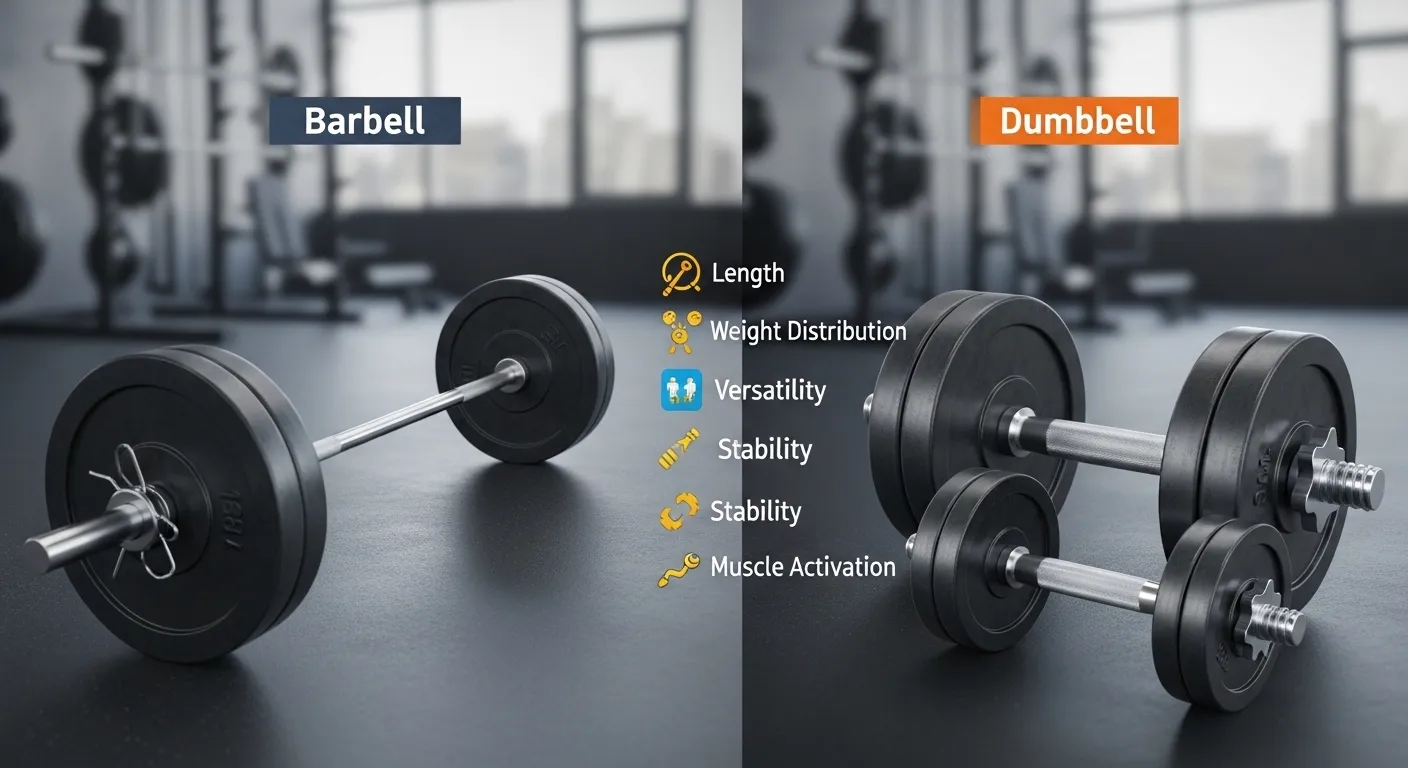
When it comes to strength training, barbells and dumbbells are two of the most common tools in gyms and home workouts. While both are used to build muscle, increase strength, and improve fitness, they differ in design, usage, and training benefits. For example, barbells allow heavier weight lifting and are ideal for compound exercises, while dumbbells provide a greater range of motion and unilateral training options. Understanding the difference between barbells and dumbbells helps fitness enthusiasts, personal trainers, and beginners choose the right equipment for their workout goals. Proper selection improves results, prevents injuries, and enhances overall strength development.
Pronunciation
- Barbell: US /ˈbɑːr.bɛl/, UK /ˈbɑː.bel/
- Dumbbell: US /ˈdʌm.bɛl/, UK /ˈdʌm.bel/
Linking Hook: Let’s explore the key differences between barbells and dumbbells to determine which is better suited for your fitness routine.
Difference Between Barbell and Dumbbell
1. Design
- Barbell: Long bar with weight plates attached at both ends.
- Example 1: Olympic barbells used in squats and deadlifts.
- Example 2: Powerlifting bars designed for heavy lifting.
- Dumbbell: Short handheld weights, fixed or adjustable.
- Example 1: Dumbbells for bicep curls.
- Example 2: Adjustable dumbbells for home workouts.
2. Weight Range
- Barbell: Can handle very heavy weights due to bar stability.
- Example 1: Powerlifters bench pressing 300+ lbs.
- Example 2: Squatting with 500 lbs in competitive lifting.
- Dumbbell: Limited individual weight, usually lighter than barbell max load.
- Example 1: Dumbbells up to 100 lbs per hand.
- Example 2: Home sets often range 5–50 lbs.
3. Range of Motion
- Barbell: Limited to fixed grip, slightly constrained range of motion.
- Example 1: Bench press follows a straight path.
- Example 2: Deadlift has fixed bar trajectory.
- Dumbbell: Allows greater freedom and range of motion.
- Example 1: Dumbbell fly stretches chest muscles fully.
- Example 2: Shoulder press allows natural arm movement.
4. Muscle Engagement
- Barbell: Both sides work together, less stabilization needed.
- Example 1: Bench press focuses on chest, shoulders, triceps.
- Example 2: Squats engage quadriceps, glutes, hamstrings symmetrically.
- Dumbbell: Each side works independently, engages stabilizing muscles.
- Example 1: Dumbbell curls correct muscle imbalances.
- Example 2: Single-arm rows improve unilateral strength.
5. Safety
- Barbell: Heavier weights increase risk of injury; spotter recommended.
- Example 1: Failed bench press can crush chest without a spotter.
- Example 2: Squat racks improve safety but still risky at max load.
- Dumbbell: Safer for solo workouts; can drop one weight if needed.
- Example 1: Easier to manage in overhead presses.
- Example 2: Reduces risk of being trapped under weights.
6. Exercise Variety
- Barbell: Best for compound exercises like bench press, squats, deadlifts.
- Example 1: Olympic lifts (clean & jerk).
- Example 2: Barbell rows for back strength.
- Dumbbell: Versatile for both compound and isolation exercises.
- Example 1: Dumbbell curls target biceps.
- Example 2: Dumbbell lateral raises for shoulders.
7. Space Requirements
- Barbell: Requires more gym space and equipment (bench, rack).
- Example 1: Home barbell setup needs a squat rack.
- Example 2: Large plates occupy storage.
- Dumbbell: Compact and ideal for small spaces.
- Example 1: Adjustable dumbbells save space.
- Example 2: Easy to use in apartments or small gyms.
8. Cost
- Barbell: Higher cost due to the bar and multiple plates.
- Example 1: Olympic barbell set may cost $300+.
- Example 2: A competition barbell with weights is expensive.
- Dumbbell: Moderate cost, adjustable sets are more economical.
- Example 1: Adjustable dumbbells $100–$300.
- Example 2: Fixed dumbbells are affordable in pairs.
9. Progress Tracking
- Barbell: Easier to measure incremental weight increases.
- Example 1: Increase 5 lbs per session on bench press.
- Example 2: Track squat progress by plates added.
- Dumbbell: Fine-tuning weight increments possible but limited by available dumbbells.
- Example 1: Switch from 20 lb to 25 lb dumbbells.
- Example 2: Adjustable sets allow 2.5 lb increments.
10. Skill Level
- Barbell: Often requires proper form and experience to avoid injury.
- Example 1: Olympic lifts need coaching.
- Example 2: Deadlift form is critical to prevent back strain.
- Dumbbell: Beginner-friendly; easier to control individual weights.
- Example 1: Dumbbell presses are easier for newcomers.
- Example 2: Single-arm exercises reduce the risk of poor form.
Nature and Behaviour
- Barbell: Heavy-duty, allows maximum load, best for strength and power training.
- Dumbbell: Flexible, portable, ideal for balanced development and corrective exercises.
Why People Are Confused
Both barbells and dumbbells build strength and muscle, and many exercises overlap. The key difference is load capacity, stabilization needs, and exercise versatility.
Table: Difference and Similarity
| Feature | Barbell | Dumbbell | Similarity |
| Weight Capacity | High; supports heavy lifts | Moderate; limited per hand | Both used for resistance training |
| Muscle Engagement | Bilateral, less stabilization | Unilateral, engages stabilizers | Both build strength and muscles |
| Range of Motion | Fixed path | Greater freedom of movement | Both can target the same muscle groups |
| Safety | Higher risk without a spotter | Safer for solo workouts | Both require proper form |
| Space Requirement | Requires bench/rack & plates | Compact and portable | Both are found in gyms & homes |
Which is Better in What Situation?
- Barbell: Best for heavy lifting, powerlifting, compound exercises, and building maximum strength. Ideal for gyms and experienced lifters.
- Dumbbell: Best for beginners, home workouts, isolation exercises, muscle balance, and injury prevention. Versatile for small spaces and solo training.
Use in Metaphors and Similes
- Barbell: “Barbells are like anchors, grounding your strength with heavy load.”
- Dumbbell: “Dumbbells are like paintbrushes, versatile tools to shape and refine muscles.”
Connotative Meaning
- Barbell: Positive for strength, discipline, and power.
- Dumbbell: Positive for flexibility, versatility, and balanced fitness.
Idioms or Proverbs
- “No pain, no gain” – applies to both barbell and dumbbell workouts.
- “Rome wasn’t built in a day” – gradual strength development through consistent use.
Literature & Movies
- Strength Training Anatomy (Book, Frédéric Delavier, 2010) – explains barbell and dumbbell exercises.
- Bigger, Faster, Stronger (Documentary, 2008, USA) – features weightlifting and gym culture.
FAQs
1. Can dumbbells replace barbells?
Yes for many exercises, but barbells allow heavier lifting and compound movements.
2. Which is better for beginners?
Dumbbells are safer and easier to control.
3. Can barbells be used at home?
Yes, but require space, rack, and heavy plates.
4. Which builds more strength?
Barbells allow heavier lifts, leading to greater strength potential.
5. Are dumbbells better for muscle balance?
Yes, because each side works independently, correcting imbalances.
How Both Are Useful for Surroundings
Both barbells and dumbbells improve fitness, physical health, and mental well-being. They are essential tools in gyms, home workouts, and rehabilitation programs.
Final Words
Barbells and dumbbells complement each other in strength training. Understanding their differences helps lifters maximize results, minimize injury, and choose the right tool for specific fitness goals.
Conclusion
Barbells are ideal for heavy, compound lifts and building maximum strength, while dumbbells offer flexibility, range of motion, and unilateral training. Both are essential for a complete workout program. Selecting the right equipment based on goals, experience, and space ensures safer, effective, and balanced muscle development.