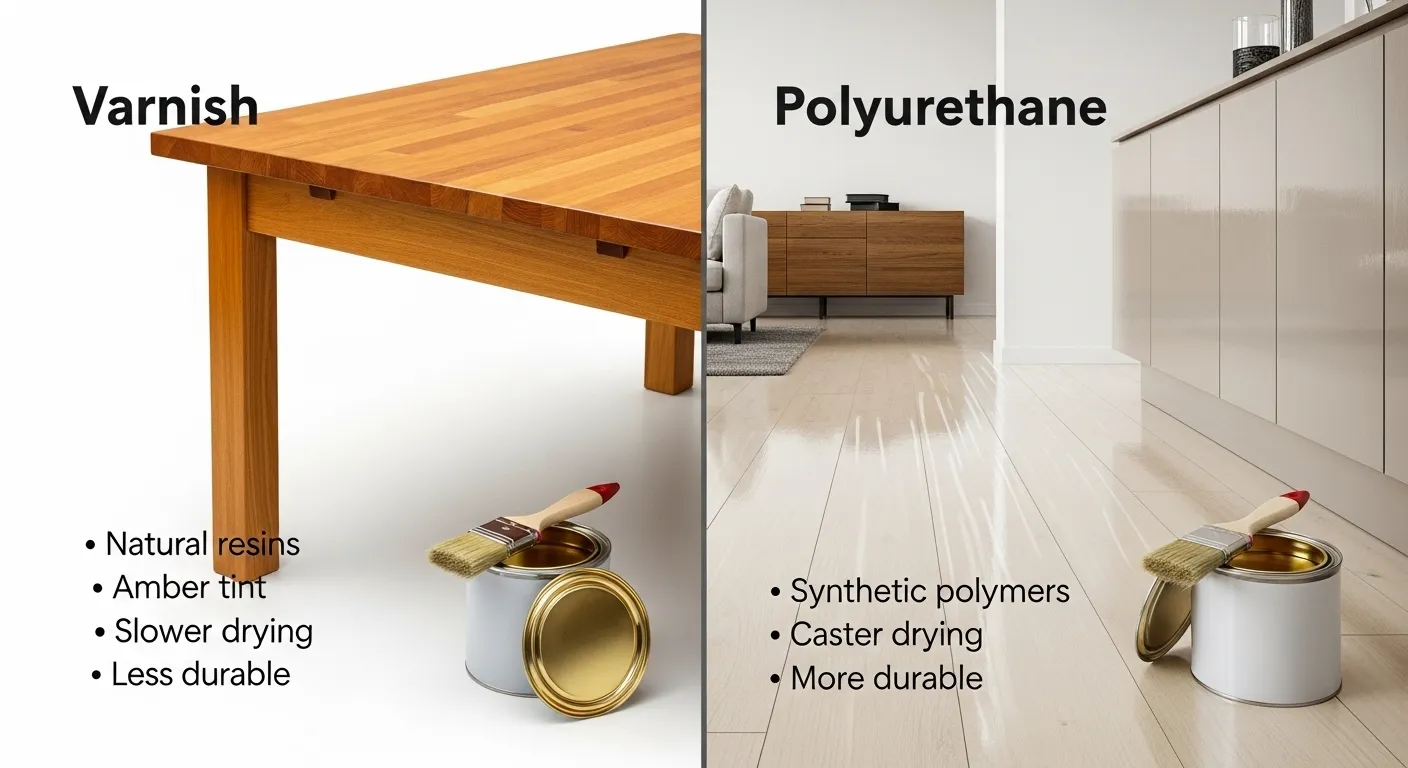
When it comes to protecting and enhancing wooden surfaces, varnish and polyurethane are two popular options. Both provide a durable finish, but they differ in composition, appearance, application, and durability. For example, varnish is a natural resin-based finish that gives a warm, glossy look, while polyurethane is a synthetic finish that provides strong, long-lasting protection against scratches and moisture. Understanding the difference between varnish and polyurethane helps woodworkers, DIY enthusiasts, and homeowners make the right choice for furniture, floors, and woodworking projects. Choosing the appropriate finish improves aesthetics, durability, and maintenance of wood surfaces.
Pronunciation
- Varnish: US /ˈvɑːr.nɪʃ/, UK /ˈvɑː.nɪʃ/
- Polyurethane: US /ˌpɑː.liˈjʊr.ə.θeɪn/, UK /ˌpɒl.iˈjʊə.rə.θeɪn/
Linking Hook: Let’s dive deeper into the key differences between varnish and polyurethane to choose the best finish for your woodworking projects.
H2 Difference Between Varnish and Polyurethane
1. Composition
- Varnish: Made from natural resins, oils, and solvents.
- Example 1: Traditional spar varnish for outdoor furniture.
- Example 2: Oil-based varnish for antique wood restoration.
- Polyurethane: Made from synthetic polymers.
- Example 1: Water-based polyurethane for floors.
- Example 2: Oil-based polyurethane for cabinets.
2. Durability
- Varnish: Resistant to UV light and weather but less scratch-resistant.
- Example 1: Outdoor decks use varnish for sun protection.
- Example 2: Wooden boats are coated with marine varnish.
- Polyurethane: Extremely durable, scratch and chemical-resistant.
- Example 1: High-traffic floors coated with polyurethane.
- Example 2: Kitchen cabinets protected against spills and scratches.
3. Appearance
- Varnish: Produces warm, amber tone; can be glossy, satin, or matte.
- Example 1: Adds rich golden hue to oak furniture.
- Example 2: Enhances the grain of antique wood.
- Polyurethane: Clear finish; maintains natural wood color; available in gloss, semi-gloss, or satin.
- Example 1: Pine floors retain natural color with clear polyurethane.
- Example 2: Modern furniture stays true to its original shade.
4. Drying Time
- Varnish: Slower drying due to oil-based formulas.
- Example 1: Oil varnish may take 24 hours per coat.
- Example 2: Multiple coats require longer intervals.
- Polyurethane: Faster drying, especially water-based versions.
- Example 1: Water-based polyurethane dries in 2–4 hours.
- Example 2: Allows quicker re-coating and project completion.
5. Application Ease
- Varnish: Requires careful brushing and multiple thin coats.
- Example 1: Avoid bubbles while brushing varnish on furniture.
- Example 2: Sanding between coats improves smoothness.
- Polyurethane: Easy to apply with brush, roller, or spray; fewer coats needed.
- Example 1: Water-based polyurethane applied quickly.
- Example 2: Smooth finish with minimal effort.
6. Maintenance
- Varnish: Requires periodic re-coating to maintain protection.
- Example 1: Outdoor wood may need annual varnish application.
- Example 2: Boats often require re-varnishing every season.
- Polyurethane: Long-lasting; rarely needs reapplication.
- Example 1: Floors may last 10–20 years without refinishing.
- Example 2: Cabinets remain protected for years.
7. Flexibility
- Varnish: Slightly flexible; adapts to wood expansion outdoors.
- Example 1: Ideal for exterior decks subject to sunlight.
- Example 2: Prevents cracking in wooden boats.
- Polyurethane: Hard and rigid; may crack if wood expands too much.
- Example 1: Best for indoor stable environments.
- Example 2: Not ideal for exterior applications without UV additives.
8. Odor
- Varnish: Strong odor due to natural oils and solvents.
- Example 1: Use in ventilated areas to reduce fumes.
- Example 2: Protective masks recommended for indoor work.
- Polyurethane: Water-based types have low odor; oil-based types stronger.
- Example 1: Water-based polyurethane safer indoors.
- Example 2: Oil-based polyurethane has chemical smell.
9. Cost
- Varnish: Moderate cost; depends on quality of resin and oils.
- Example 1: Marine varnish more expensive than standard varnish.
- Example 2: Antique wood restorers often use premium varnish.
- Polyurethane: Slightly higher cost, but durability offsets expense.
- Example 1: High-quality polyurethane floor coatings are cost-effective long-term.
- Example 2: Water-based polyurethane cheaper than oil-based types.
10. Environmental Impact
- Varnish: Solvent-based versions emit VOCs; not eco-friendly.
- Example 1: Outdoor varnish can release fumes.
- Example 2: Oil-based varnish requires careful disposal.
- Polyurethane: Water-based polyurethane is low-VOC and safer for indoor use.
- Example 1: Eco-friendly floors use water-based polyurethane.
- Example 2: Indoor furniture coatings safer with low-VOC polyurethane.
Nature and Behaviour
- Varnish: Traditional, natural finish; warms wood tones; ideal for outdoor and decorative wood.
- Polyurethane: Modern, synthetic finish; clear and tough; ideal for high-traffic or indoor wood surfaces.
Why People Are Confused
Both create a protective finish on wood, are available in oil or water-based formulas, and can be glossy or satin. The confusion comes from similar appearance and overlapping indoor use.
Table: Difference and Similarity
| Feature | Varnish | Polyurethane | Similarity |
| Composition | Natural resins and oils | Synthetic polymers | Both protect wood surfaces |
| Durability | Moderate; UV resistant | High; scratch and chemical resistant | Both available in gloss/satin |
| Appearance | Warm amber tone | Clear, maintains natural color | Both enhance wood grain |
| Application | Multiple thin coats, slower drying | Easier, faster drying, fewer coats | Both can be brushed or sprayed |
| Maintenance | Needs periodic re-coating | Long-lasting, minimal upkeep | Both provide wood protection |
Which is Better in What Situation?
- Varnish: Ideal for outdoor furniture, boats, and antique wood where warmth and UV resistance matter.
- Polyurethane: Best for indoor floors, cabinets, and high-traffic surfaces requiring scratch resistance and low maintenance.
Use in Metaphors and Similes
- Varnish: “Varnish glazes wood like a golden sunset over a forest.”
- Polyurethane: “Polyurethane coats wood like a clear shield, strong and protective.”
Connotative Meaning
- Varnish: Positive; warmth, beauty, traditional craftsmanship.
- Polyurethane: Positive; durability, protection, modern efficiency.
Idioms or Proverbs
- “Don’t put a shiny varnish on a rotten wood” – superficial beauty doesn’t fix underlying problems.
- “Protect like polyurethane” – to safeguard something thoroughly.
Literature & Movies
- The Wood Finisher’s Handbook (Book, 2018) – woodworking guide with varnish and polyurethane techniques.
- How It’s Made: Furniture (TV Series, 2001–Present) – demonstrates finishes including varnish and polyurethane.
FAQs
1. Can I use varnish instead of polyurethane?
Yes for decorative or outdoor projects, but polyurethane is more durable for high-traffic surfaces.
2. Is water-based polyurethane better than varnish indoors?
Yes, low odor, fast drying, and safe for indoor use.
3. Which finish gives a warmer wood tone?
Varnish enhances warm, amber tones.
4. Can polyurethane be used outdoors?
Yes, but oil-based with UV additives is recommended.
5. How many coats are needed?
Varnish: 3–5 coats; Polyurethane: 2–3 coats depending on type.
How Both Are Useful for Surroundings
Both protect and enhance wood surfaces, increasing durability, aesthetic appeal, and longevity of furniture, floors, and outdoor structures. Proper use reduces maintenance costs and preserves wood for years.
Final Words
Choosing between varnish and polyurethane depends on the project, wood type, exposure, and desired finish. Both finishes offer benefits, but knowing their differences ensures lasting protection and aesthetic appeal.
Conclusion
Varnish and polyurethane are essential wood finishes but serve different purposes. Varnish offers warmth, traditional beauty, and UV protection for decorative or outdoor wood. Polyurethane provides unmatched durability, scratch resistance, and low-maintenance protection, ideal for indoor floors, cabinets, and high-traffic surfaces. Understanding their composition, application, and performance helps woodworkers, homeowners, and DIY enthusiasts select the best finish for each project. By choosing correctly, you protect wood, enhance its appearance, and extend its life for years.