While lifting a cup of tea, your hand rotates slightly without you even noticing. This simple action involves two important movements: Pronation and Supination. These terms are commonly used in anatomy, fitness, and sports science. The difference between pronation and supination lies in the direction your hand or foot rotates. Understanding the difference between pronation and supination is essential for students, athletes, and healthcare professionals. In fact, knowing the difference between pronation and supination can help prevent injuries, improve exercise techniques, and enhance overall body awareness in daily activities.
Key Difference Between the Two
The main difference between pronation and supination is:
- Pronation is the inward rotation of the forearm or foot.
- Supination is the outward rotation of the forearm or foot.
Why is the difference important to Know?
Understanding the difference between pronation and supination is important for maintaining proper posture and movement. For learners and experts in anatomy, it helps in studying body mechanics. In society, this knowledge supports better athletic performance, injury prevention, and rehabilitation, especially in activities like running, weightlifting, and physiotherapy.
Pronunciation (US & UK)
- Pronation
- US: /proʊˈneɪ.ʃən/
- UK: /prəʊˈneɪ.ʃən/
- Supination
- US: /ˌsuː.pɪˈneɪ.ʃən/
- UK: /ˌsuː.pɪˈneɪ.ʃən/
Linking Hook
Let’s now explore the detailed difference between pronation and supination to understand how these movements work in the body.
H2: Difference Between Pronation and Supination
1. Definition
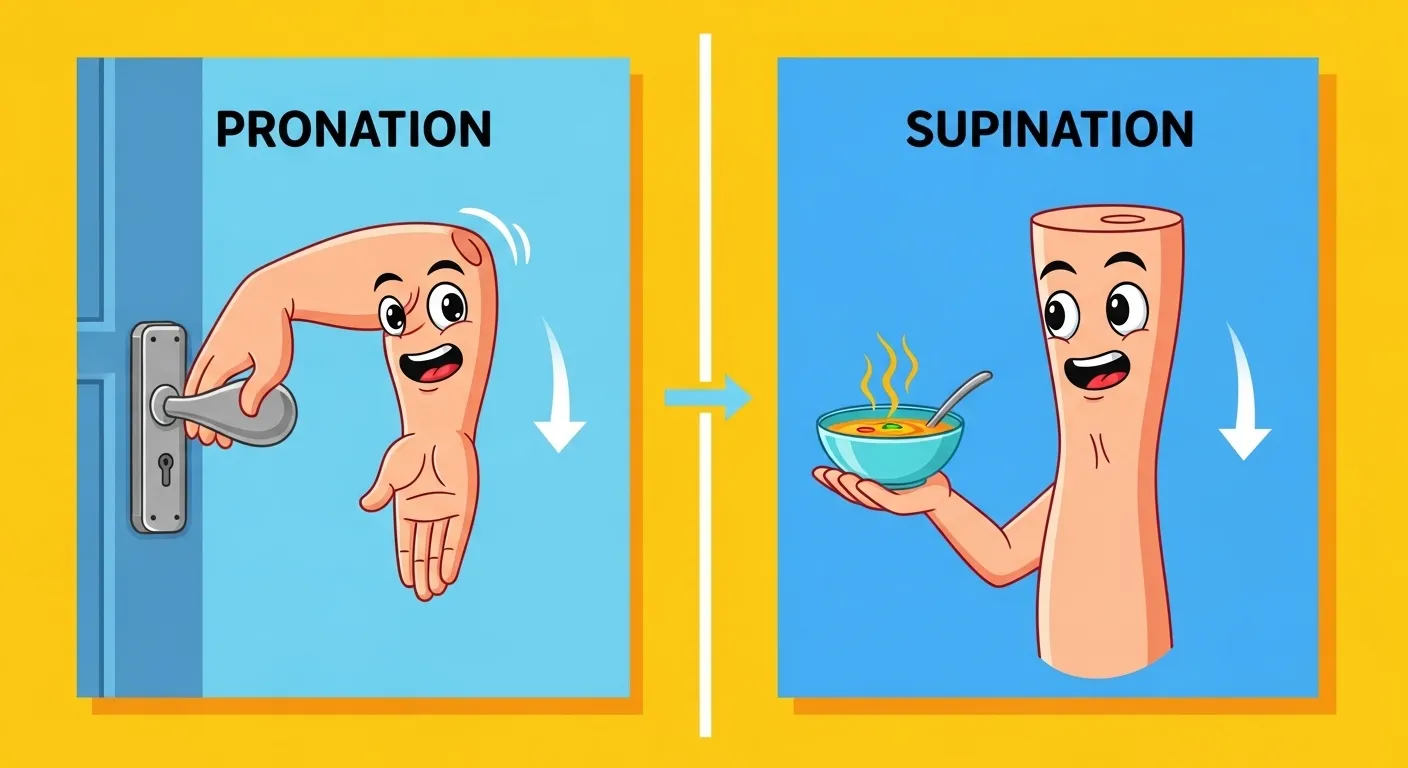
- Pronation: Rotation that turns the palm downward.
- Example 1: Typing on a keyboard.
- Example 2: Placing your hand flat on a table.
- Supination: Rotation that turns the palm upward.
- Example 1: Holding a bowl of soup.
- Example 2: Receiving change in your hand.
2. Direction of Movement
- Pronation: Inward rotation.
- Example 1: Foot rolling inward while walking.
- Example 2: Wrist turning inward.
- Supination: Outward rotation.
- Example 1: Foot rolling outward.
- Example 2: Wrist turning outward.
3. Forearm Position
- Pronation: Radius crosses over ulna.
- Example 1: Palm facing down.
- Example 2: Gripping objects downward.
- Supination: The radius and ulna are parallel.
- Example 1: Palm facing up.
- Example 2: Holding objects upward.
4. Muscle Involvement
- Pronation: Uses pronator muscles.
- Example 1: Pronator teres.
- Example 2: Pronator quadratus.
- Supination: Uses the supinator muscles.
- Example 1: Biceps brachii.
- Example 2: Supinator muscle.
5. Foot Movement
- Pronation: Foot rolls inward.
- Example 1: Flat-foot walking.
- Example 2: Absorbing shock.
- Supination: Foot rolls outward.
- Example 1: High-arched walking.
- Example 2: Less shock absorption.
6. Function
- Pronation: Helps in shock absorption.
- Example 1: Running impact control.
- Example 2: Walking balance.
- Supination: Helps in propulsion.
- Example 1: Pushing off while running.
- Example 2: Jumping movements.
7. Common Use
- Pronation: Everyday tasks.
- Example 1: Writing.
- Example 2: Using a mouse.
- Supination: Lifting and holding.
- Example 1: Carrying a tray.
- Example 2: Curling weights.
8. Injury Risk
- Pronation: Overpronation can cause strain.
- Example 1: Knee pain.
- Example 2: Shin splints.
- Supination: Oversupination can reduce shock absorption.
- Example 1: Ankle injuries.
- Example 2: Stress fractures.
9. Exercise Context
- Pronation: Used in push-ups.
- Example 1: Palms down.
- Example 2: Plank position.
- Supination: Used in bicep curls.
- Example 1: Palms up grip.
- Example 2: Chin-ups.
10. Visual Cue
- Pronation: Palm down / foot inward.
- Example 1: Typing posture.
- Example 2: Walking stance.
- Supination: Palm up / foot outward.
- Example 1: Holding soup.
- Example 2: Lifting weights.
Nature and Behaviour
- Pronation: Inward, stabilizing, and shock-absorbing.
- Supination: Outward, propelling, and lifting.
Why People Are Confused?
People often confuse pronation and supination because both involve rotation and occur in similar body parts like the forearm and foot. Their opposite meanings make them easy to mix up.
Comparison Table
| Feature | Pronation | Supination | Similarity |
| Direction | Inward | Outward | Rotational movement |
| Palm Position | Down | Up | Involves forearm |
| Function | Shock absorption | Propulsion | Used in movement |
| Foot Action | Rolls inward | Rolls outward | Affects walking/running |
| Risk | Overpronation injuries | Supination injuries | Can cause imbalance |
Which Is Better in What Situation?
Pronation is better for absorbing shock during walking and running. It helps distribute body weight evenly and reduces impact stress on joints. Proper pronation is essential for balance and stability.
Supination is better for movements requiring strength and propulsion. It helps in lifting, pushing, and generating force. In activities like weightlifting or sprinting, supination provides power and control.
Metaphors and Similes
- Pronation: “Like cushioning a fall.”
- Supination: “Like pushing off the ground.”
Connotative Meanings
- Pronation: Stability and support (positive)
- Supination: Strength and power (positive)
Idioms and Proverbs (Creative Use)
- “Go with the flow” → Pronation
- “Stand your ground” → Supination
Works in Literature
- Anatomy and physiology textbooks (various authors)
Movies Related to the Topic
- Sports and fitness documentaries (various countries)
FAQs
1. Are pronation and supination opposites?
Yes, they are opposite movements.
2. Which is more common?
Pronation is more common in daily activities.
3. Can both occur in feet and hands?
Yes, both movements occur in forearms and feet.
4. Which causes more injuries?
Both can cause injuries if excessive.
5. How can I remember them?
“Soup = Supination” (holding soup with palm up).
How Both Are Useful for Society
Both movements are essential for everyday activities, sports performance, and maintaining proper body mechanics.
Final Words for Both
Pronation and supination are fundamental movements that keep our bodies functional and efficient.
Conclusion
In conclusion, the difference between pronation and supination lies in the direction of movement and their roles in the body. Pronation involves inward rotation and shock absorption, while supination involves outward rotation and propulsion. Understanding the difference between pronation and supination helps improve movement, prevent injuries, and enhance overall physical performance.