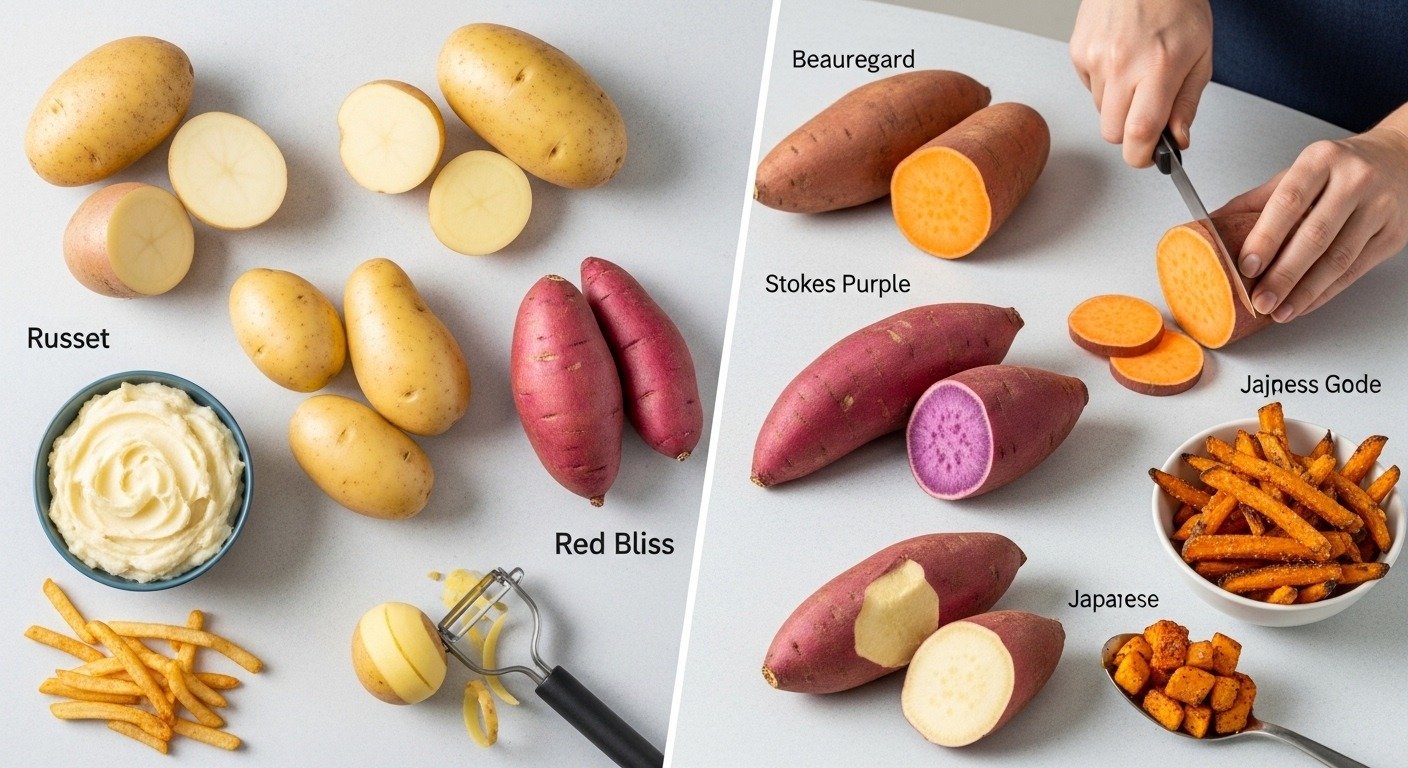
Potatoes and sweet potatoes are two popular root vegetables found in kitchens worldwide. While both are tubers, they differ in taste, nutrition, texture, and culinary uses. For example, potatoes are starchy, versatile, and commonly used in fries, mashed dishes, or baked recipes. Sweet potatoes are naturally sweeter, high in fiber and vitamin A, and often roasted, mashed, or used in desserts. Understanding the difference between potatoes and sweet potatoes helps cooks, nutritionists, and health-conscious individuals choose the right ingredient for meals, diets, and recipes. By learning their differences, you can improve nutrition, flavor, and cooking versatility.
Pronunciation
- Potato: US /pəˈteɪ.toʊ/, UK /pəˈteɪ.təʊ/
- Sweet Potato: US /ˌswiːt pəˈteɪ.toʊ/, UK /ˌswiːt pəˈteɪ.təʊ/
Linking Hook: Let’s explore the key differences between potatoes and sweet potatoes in terms of nutrition, taste, and culinary uses.
Difference Between Potatoes and Sweet Potatoes
1. Botanical Family
- Potatoes: Belong to the nightshade family (Solanaceae).
- Example 1: Regular white potatoes are Solanum tuberosum.
- Example 2: Red potatoes are also in the nightshade family.
- Sweet Potatoes: Belong to the morning glory family (Convolvulaceae).
- Example 1: Orange-fleshed sweet potatoes are Ipomoea batatas.
- Example 2: Purple sweet potatoes are another variety in the same family.
2. Taste
- Potatoes: Mild, starchy flavor.
- Example 1: Mashed potatoes taste creamy and neutral.
- Example 2: Potato chips are salty and savory.
- Sweet Potatoes: Naturally sweet flavor.
- Example 1: Roasted sweet potatoes taste caramelized and sweet.
- Example 2: Sweet potato pie is dessert-friendly.
3. Color
- Potatoes: Usually white, yellow, or red skin with white or yellow flesh.
- Example 1: Russet potatoes have brown skin and white flesh.
- Example 2: Red potatoes have red skin and creamy white flesh.
- Sweet Potatoes: Skin can be orange, purple, or brown with orange, white, or purple flesh.
- Example 1: Orange sweet potatoes are bright inside and out.
- Example 2: Purple sweet potatoes have vibrant violet flesh.
4. Nutritional Value
- Potatoes: High in starch and carbohydrates, moderate vitamins and minerals.
- Example 1: White potatoes provide vitamin C and potassium.
- Example 2: Boiled potatoes are low in fat.
- Sweet Potatoes: High in fiber, beta-carotene, and vitamins A & C.
- Example 1: Orange sweet potatoes boost eye health.
- Example 2: Sweet potatoes are lower on the glycemic index than white potatoes.
5. Glycemic Index
- Potatoes: High glycemic index; can spike blood sugar.
- Example 1: Mashed white potatoes raise glucose levels quickly.
- Example 2: Potato fries have a rapid sugar release.
- Sweet Potatoes: Lower glycemic index; slower sugar release.
- Example 1: Roasted sweet potatoes provide stable energy.
- Example 2: Good option for diabetics compared to white potatoes.
6. Cooking Methods
- Potatoes: Boiled, baked, fried, roasted, mashed.
- Example 1: French fries and hash browns.
- Example 2: Baked potatoes with toppings.
- Sweet Potatoes: Roasted, boiled, mashed, baked, desserts.
- Example 1: Sweet potato casserole with marshmallows.
- Example 2: Sweet potato fries or chips.
7. Texture
- Potatoes: Fluffy or waxy depending on variety.
- Example 1: Russets are fluffy when baked.
- Example 2: Red potatoes stay firm when boiled.
- Sweet Potatoes: Creamy, denser texture.
- Example 1: Mashed sweet potatoes are smooth.
- Example 2: Roasted sweet potatoes hold shape but remain soft.
8. Storage
- Potatoes: Store in a cool, dark, dry place; avoid refrigeration.
- Example 1: Pantry storage prevents sprouting.
- Example 2: Keep away from sunlight to prevent greening.
- Sweet Potatoes: Store in a cool, dry, well-ventilated area; do not refrigerate.
- Example 1: Basements or cellars are ideal.
- Example 2: Avoid damp areas to prevent rot.
9. Culinary Popularity
- Potatoes: Common worldwide in savory dishes.
- Example 1: Staple in American, European, and Indian meals.
- Example 2: Used in soups, stews, and side dishes.
- Sweet Potatoes: Popular in desserts, roasting, and holiday recipes.
- Example 1: Sweet potato pie in Thanksgiving meals.
- Example 2: Roasted sweet potatoes in Asian cuisines.
10. Health Benefits
- Potatoes: Provide energy, potassium, and vitamin C.
- Example 1: Good for pre-workout meals.
- Example 2: Support heart health due to potassium.
- Sweet Potatoes: Boost immunity, vision, digestion, and blood sugar control.
- Example 1: Beta-carotene supports eye health.
- Example 2: High fiber aids digestion.
Nature and Behaviour
- Potatoes: Starchy, neutral flavor, versatile in savory cooking, high in carbs.
- Sweet Potatoes: Naturally sweet, fibrous, nutrient-dense, good for desserts and health-focused meals.
Why People Are Confused
Both are tubers, similar in shape and cooking style. The confusion arises because sweet potatoes are often mistakenly called yams, and both can be roasted or mashed.
Table: Difference and Similarity
| Feature | Potato | Sweet Potato | Similarity |
| Taste | Starchy, mild | Sweet | Both are edible tubers |
| Color | White, yellow, red | Orange, purple, white | Both have edible skin and flesh |
| Nutrients | Vitamin C, potassium | Vitamin A, fiber, antioxidants | Both provide energy and carbs |
| Glycemic Index | High | Lower | Both can be boiled, baked, roasted |
| Culinary Use | Savory dishes | Savory & sweet dishes | Both are versatile |
Which is Better in What Situation?
- Potatoes: Better for high-carb meals, frying, mashing, and savory recipes.
- Sweet Potatoes: Better for nutrient-rich, antioxidant-rich meals, desserts, or low-GI diets.
Use in Metaphors and Similes
- Potatoes: “As common as a potato” – everyday staple.
- Sweet Potatoes: “Sweet as a sweet potato” – naturally sweet or delightful.
Connotative Meaning
- Potatoes: Neutral; staple food, everyday meals.
- Sweet Potatoes: Positive; nutritious, tasty, and healthy.
Idioms or Proverbs
- “Couch potato” – lazy person.
- “Eat your sweet potatoes” – enjoy healthy, beneficial food.
Literature & Movies
- The Potato King (Novel, 2016) – fiction, culinary and cultural references.
- Sweet Home Alabama (Movie, 2002, USA) – sweet potato dishes featured in southern cuisine scenes.
FAQs
1. Are potatoes and sweet potatoes related?
No, they belong to different plant families.
2. Which is healthier?
Sweet potatoes are richer in fiber, vitamins, and antioxidants.
3. Can you substitute one for the other?
Yes in most recipes, but flavor and texture will differ.
4. Are sweet potatoes better for diabetics?
Yes, due to lower glycemic index.
5. How should I store them?
Keep both in a cool, dry, ventilated area; do not refrigerate.
How Both Are Useful for Surroundings
Potatoes provide affordable, high-carb food for large populations. Sweet potatoes offer nutrient-rich alternatives that improve diet quality and provide sustainable crops in varied climates.
Final Words
Potatoes and sweet potatoes each have unique nutritional profiles, flavors, and culinary uses. Understanding their differences helps in meal planning, diet improvement, and cooking creativity.
Conclusion
Potatoes are starchy, versatile, and common in savory dishes, while sweet potatoes are sweeter, nutrient-dense, and ideal for health-conscious meals. Both are essential tubers that enrich diets, support energy needs, and enhance cooking options. Choosing between them depends on flavor preference, nutritional goals, and recipe requirements.