A student once shared in class that they didn’t feel like a “man” or a “woman,” but something in between. Another student said they didn’t feel any gender at all. These real-life experiences highlight the difference between nonbinary and agender. While both identities fall outside traditional gender categories, the difference between nonbinary and agender lies in how individuals experience and relate to gender itself. For many people exploring identity, understanding the difference between nonbinary and agender brings clarity, confidence, and respect in communication. In fact, learning the difference between nonbinary and agender is essential in today’s diverse and inclusive society, where gender is no longer seen as strictly binary.
Key Difference Between the Two
The main difference between nonbinary and agender is that:
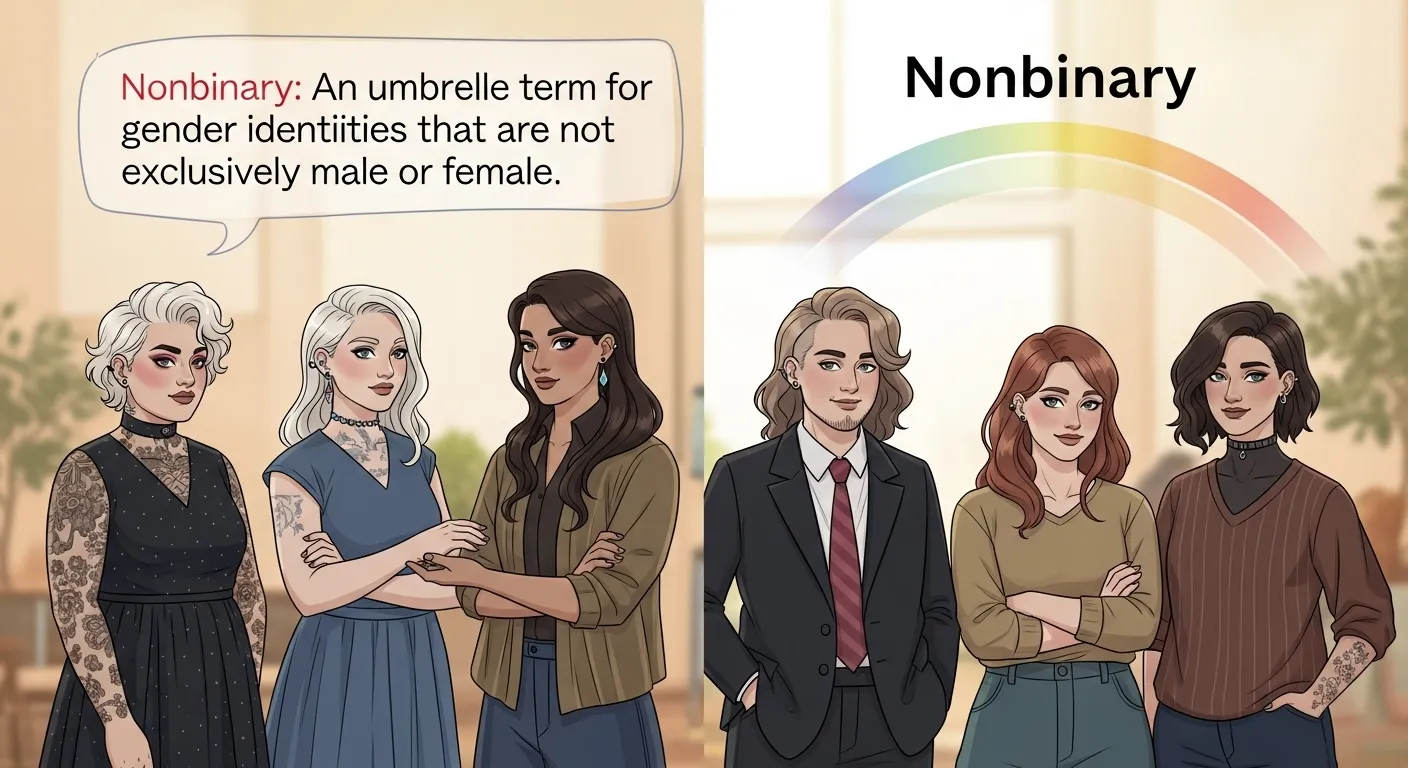
- Nonbinary refers to people whose gender identity is not strictly male or female (it may be a mix, fluid, or something else).
- Agender refers to people who do not identify with any gender at all.
Why is the difference important to Know?
Understanding the difference between nonbinary and agender is important for students, educators, and professionals. It promotes respectful communication and inclusivity. Misunderstanding these identities can lead to incorrect assumptions or language. In society, recognizing diverse gender identities supports equality, mental well-being, and acceptance. For experts in psychology, sociology, and education, this knowledge helps create safe and inclusive environments.
Pronunciation (US & UK)
- Nonbinary
- US: /ˌnɑːnˈbaɪ.nər.i/
- UK: /ˌnɒnˈbaɪ.nə.ri/
- Agender
- US: /eɪˈdʒɛn.dər/
- UK: /eɪˈdʒen.də/
Linking Hook
Now that we’ve covered the basics, let’s explore the detailed difference between nonbinary and agender to better understand their unique meanings.
H2: Difference Between Nonbinary and Agender
1. Definition
- Nonbinary: A broad identity outside male/female categories.
- Example 1: Someone identifies as both male and female.
- Example 2: A person feels their gender changes over time.
- Agender: No gender identity at all.
- Example 1: A person feels neutral about gender.
- Example 2: Someone rejects the concept of gender entirely.
2. Relationship to Gender
- Nonbinary: Has a gender identity (but not strictly male/female).
- Example 1: Identifying as genderfluid.
- Example 2: Identifying as bigender.
- Agender: Does not relate to gender.
- Example 1: Feeling genderless.
- Example 2: No internal sense of gender.
3. Spectrum Placement
- Nonbinary: Umbrella term with many identities.
- Example 1: Includes demigender identities.
- Example 2: Includes genderqueer people.
- Agender: Specific identity within or alongside nonbinary spectrum.
- Example 1: A distinct identity category.
- Example 2: Not all nonbinary people are agender.
4. Expression
- Nonbinary: Expression may vary widely.
- Example 1: Androgynous clothing.
- Example 2: Mix of masculine and feminine traits.
- Agender: Often neutral expression (but not required).
- Example 1: Minimal gender expression.
- Example 2: Preference for neutral styles.
5. Pronouns
- Nonbinary: May use they/them or other pronouns.
- Example 1: Using “they” in conversation.
- Example 2: Some use he/they or she/they.
- Agender: Often prefer neutral pronouns.
- Example 1: They/them usage.
- Example 2: Avoiding gendered pronouns.
6. Identity Flexibility
- Nonbinary: Can be fluid or fixed.
- Example 1: Genderfluid identity.
- Example 2: Stable nonbinary identity.
- Agender: Typically fixed absence of gender.
- Example 1: Consistently genderless identity.
- Example 2: No shift in gender feeling.
7. Emotional Connection
- Nonbinary: May feel connected to gender in some way.
- Example 1: Partial identification with masculinity.
- Example 2: Blended gender experience.
- Agender: Little or no emotional connection to gender.
- Example 1: Indifference to gender roles.
- Example 2: No gender-based identity feelings.
8. Social Identity
- Nonbinary: Often seeks recognition as a gender identity.
- Example 1: Requesting inclusive language.
- Example 2: Identifying openly as nonbinary.
- Agender: May reject gender labels entirely.
- Example 1: Avoiding gender categories.
- Example 2: Preferring not to label gender.
9. Cultural Awareness
- Nonbinary: More widely recognized term.
- Example 1: Seen in media discussions.
- Example 2: Included in gender forms.
- Agender: Less commonly understood.
- Example 1: Requires explanation in conversations.
- Example 2: Less visible in society.
10. Conceptual Meaning
- Nonbinary: “Beyond binary gender.”
- Example 1: Not limited to male/female.
- Example 2: Includes multiple identities.
- Agender: “Without gender.”
- Example 1: No gender identity.
- Example 2: Absence of gender concept.
Nature and Behaviour
- Nonbinary: Diverse, flexible, and inclusive of many gender experiences.
- Agender: Neutral, minimalistic, and centered on the absence of gender.
Why People Are Confused?
People often confuse these terms because both fall outside the traditional male/female binary. Additionally, agender is sometimes included under the nonbinary umbrella, which makes the distinction less obvious.
Comparison Table
| Feature | Nonbinary | Agender | Similarity |
| Definition | Not male or female | No gender | Outside binary gender |
| Identity | Has gender identity | No gender identity | Gender diversity |
| Scope | Broad umbrella | Specific identity | Inclusive categories |
| Expression | Varies widely | Often neutral | Personal expression |
| Pronouns | Various | Usually neutral | May use they/them |
Which Is Better in What Situation?
Nonbinary is a helpful term when someone feels their identity exists beyond traditional gender categories but still wants to express some form of gender. It allows flexibility and inclusivity for many experiences.
Agender is better suited for individuals who feel no connection to gender at all. It provides a clear and specific identity for those who experience a complete absence of gender.
Metaphors and Similes
- Nonbinary: “Like a spectrum of colors beyond black and white.”
- Agender: “Like a blank canvas with no color at all.”
Connotative Meanings
- Nonbinary: Positive (diversity, inclusivity)
- Example: “A symbol of gender freedom.”
- Agender: Neutral to positive (clarity, neutrality)
- Example: “Freedom from gender identity.”
Idioms and Proverbs (Creative Use)
- “Think outside the box” → Nonbinary
- “Nothingness speaks volumes” → Agender
Works in Literature
- “Gender Outlaw” – Memoir, Kate Bornstein, 1994
- “Nonbinary: Memoirs of Gender and Identity” – Anthology, Various Authors, 2019
Movies Related to the Topic
- “They” – 2017, USA/France
- “A Fantastic Woman” – 2017, Chile
FAQs
1. Is agender a type of nonbinary?
Sometimes, yes. Agender can fall under the nonbinary umbrella.
2. Do nonbinary people have a gender?
Yes, but it is not strictly male or female.
3. Do agender people have any gender identity?
No, they identify as having no gender.
4. Can someone switch between these identities?
Yes, identity can evolve over time.
5. What pronouns do they use?
Often they/them, but it depends on personal preference.
How Both Are Useful for Society
Both identities help broaden understanding of gender, promote inclusivity, and support individuals in expressing their authentic selves. They contribute to a more accepting and diverse society.
Final Words for Both
Nonbinary and agender identities reflect the evolving understanding of gender in modern society. Each offers a unique perspective on identity and self-expression.
Conclusion
In conclusion, the difference between nonbinary and agender lies in the presence or absence of gender identity. Nonbinary includes a wide range of identities beyond male and female, while agender specifically refers to having no gender at all. Understanding the difference between nonbinary and agender helps foster respect, clarity, and inclusivity. As society continues to evolve, recognizing and respecting these identities becomes increasingly important for meaningful communication and human connection.
Meta Description
Learn the difference between nonbinary and agender with clear explanations, examples, and comparisons in this easy and inclusive guide to gender identities.
Difference Between Nonbinary and Agender: Understanding Gender Identities Clearly
Introduction
A student once shared in class that they didn’t feel like a “man” or a “woman,” but something in between. Another student said they didn’t feel any gender at all. These real-life experiences highlight the difference between nonbinary and agender. While both identities fall outside traditional gender categories, the difference between nonbinary and agender lies in how individuals experience and relate to gender itself. For many people exploring identity, understanding the difference between nonbinary and agender brings clarity, confidence, and respect in communication. In fact, learning the difference between nonbinary and agender is essential in today’s diverse and inclusive society, where gender is no longer seen as strictly binary.
Key Difference Between the Both
The main difference between nonbinary and agender is that:
- Nonbinary refers to people whose gender identity is not strictly male or female (it may be a mix, fluid, or something else).
- Agender refers to people who do not identify with any gender at all.
Why is the difference important to Know?
Understanding the difference between nonbinary and agender is important for students, educators, and professionals. It promotes respectful communication and inclusivity. Misunderstanding these identities can lead to incorrect assumptions or language. In society, recognizing diverse gender identities supports equality, mental well-being, and acceptance. For experts in psychology, sociology, and education, this knowledge helps create safe and inclusive environments.
Pronunciation (US & UK)
- Nonbinary
- US: /ˌnɑːnˈbaɪ.nər.i/
- UK: /ˌnɒnˈbaɪ.nə.ri/
- Agender
- US: /eɪˈdʒɛn.dər/
- UK: /eɪˈdʒen.də/
Linking Hook
Now that we’ve covered the basics, let’s explore the detailed difference between nonbinary and agender to better understand their unique meanings.
H2: Difference Between Nonbinary and Agender
1. Definition
- Nonbinary: A broad identity outside male/female categories.
- Example 1: Someone identifies as both male and female.
- Example 2: A person feels their gender changes over time.
- Agender: No gender identity at all.
- Example 1: A person feels neutral about gender.
- Example 2: Someone rejects the concept of gender entirely.
2. Relationship to Gender
- Nonbinary: Has a gender identity (but not strictly male/female).
- Example 1: Identifying as genderfluid.
- Example 2: Identifying as bigender.
- Agender: Does not relate to gender.
- Example 1: Feeling genderless.
- Example 2: No internal sense of gender.
3. Spectrum Placement
- Nonbinary: Umbrella term with many identities.
- Example 1: Includes demigender identities.
- Example 2: Includes genderqueer people.
- Agender: Specific identity within or alongside nonbinary spectrum.
- Example 1: A distinct identity category.
- Example 2: Not all nonbinary people are agender.
4. Expression
- Nonbinary: Expression may vary widely.
- Example 1: Androgynous clothing.
- Example 2: Mix of masculine and feminine traits.
- Agender: Often neutral expression (but not required).
- Example 1: Minimal gender expression.
- Example 2: Preference for neutral styles.
5. Pronouns
- Nonbinary: May use they/them or other pronouns.
- Example 1: Using “they” in conversation.
- Example 2: Some use he/they or she/they.
- Agender: Often prefer neutral pronouns.
- Example 1: They/them usage.
- Example 2: Avoiding gendered pronouns.
6. Identity Flexibility
- Nonbinary: Can be fluid or fixed.
- Example 1: Genderfluid identity.
- Example 2: Stable nonbinary identity.
- Agender: Typically fixed absence of gender.
- Example 1: Consistently genderless identity.
- Example 2: No shift in gender feeling.
7. Emotional Connection
- Nonbinary: May feel connected to gender in some way.
- Example 1: Partial identification with masculinity.
- Example 2: Blended gender experience.
- Agender: Little or no emotional connection to gender.
- Example 1: Indifference to gender roles.
- Example 2: No gender-based identity feelings.
8. Social Identity
- Nonbinary: Often seeks recognition as a gender identity.
- Example 1: Requesting inclusive language.
- Example 2: Identifying openly as nonbinary.
- Agender: May reject gender labels entirely.
- Example 1: Avoiding gender categories.
- Example 2: Preferring not to label gender.
9. Cultural Awareness
- Nonbinary: More widely recognized term.
- Example 1: Seen in media discussions.
- Example 2: Included in gender forms.
- Agender: Less commonly understood.
- Example 1: Requires explanation in conversations.
- Example 2: Less visible in society.
10. Conceptual Meaning
- Nonbinary: “Beyond binary gender.”
- Example 1: Not limited to male/female.
- Example 2: Includes multiple identities.
- Agender: “Without gender.”
- Example 1: No gender identity.
- Example 2: Absence of gender concept.
Nature and Behaviour
- Nonbinary: Diverse, flexible, and inclusive of many gender experiences.
- Agender: Neutral, minimalistic, and centered on the absence of gender.
Why People Are Confused?
People often confuse these terms because both fall outside the traditional male/female binary. Additionally, agender is sometimes included under the nonbinary umbrella, which makes the distinction less obvious.
Comparison Table
| Feature | Nonbinary | Agender | Similarity |
| Definition | Not male or female | No gender | Outside binary gender |
| Identity | Has gender identity | No gender identity | Gender diversity |
| Scope | Broad umbrella | Specific identity | Inclusive categories |
| Expression | Varies widely | Often neutral | Personal expression |
| Pronouns | Various | Usually neutral | May use they/them |
Which Is Better in What Situation?
Nonbinary is a helpful term when someone feels their identity exists beyond traditional gender categories but still wants to express some form of gender. It allows flexibility and inclusivity for many experiences.
Agender is better suited for individuals who feel no connection to gender at all. It provides a clear and specific identity for those who experience a complete absence of gender.
Metaphors and Similes
- Nonbinary: “Like a spectrum of colors beyond black and white.”
- Agender: “Like a blank canvas with no color at all.”
Connotative Meanings
- Nonbinary: Positive (diversity, inclusivity)
- Example: “A symbol of gender freedom.”
- Agender: Neutral to positive (clarity, neutrality)
- Example: “Freedom from gender identity.”
Idioms and Proverbs (Creative Use)
- “Think outside the box” → Nonbinary
- “Nothingness speaks volumes” → Agender
Works in Literature
- “Gender Outlaw” – Memoir, Kate Bornstein, 1994
- “Nonbinary: Memoirs of Gender and Identity” – Anthology, Various Authors, 2019
Movies Related to the Topic
- “They” – 2017, USA/France
- “A Fantastic Woman” – 2017, Chile
FAQs
1. Is agender a type of nonbinary?
Sometimes, yes. Agender can fall under the nonbinary umbrella.
2. Do nonbinary people have a gender?
Yes, but it is not strictly male or female.
3. Do agender people have any gender identity?
No, they identify as having no gender.
4. Can someone switch between these identities?
Yes, identity can evolve over time.
5. What pronouns do they use?
Often they/them, but it depends on personal preference.
How Both Are Useful for Society
Both identities help broaden understanding of gender, promote inclusivity, and support individuals in expressing their authentic selves. They contribute to a more accepting and diverse society.
Final Words for Both
Nonbinary and agender identities reflect the evolving understanding of gender in modern society. Each offers a unique perspective on identity and self-expression.
Conclusion
In conclusion, the difference between nonbinary and agender lies in the presence or absence of gender identity. Nonbinary includes a wide range of identities beyond male and female, while agender specifically refers to having no gender at all. Understanding the difference between nonbinary and agender helps foster respect, clarity, and inclusivity. As society continues to evolve, recognizing and respecting these identities becomes increasingly important for meaningful communication and human connection.
.