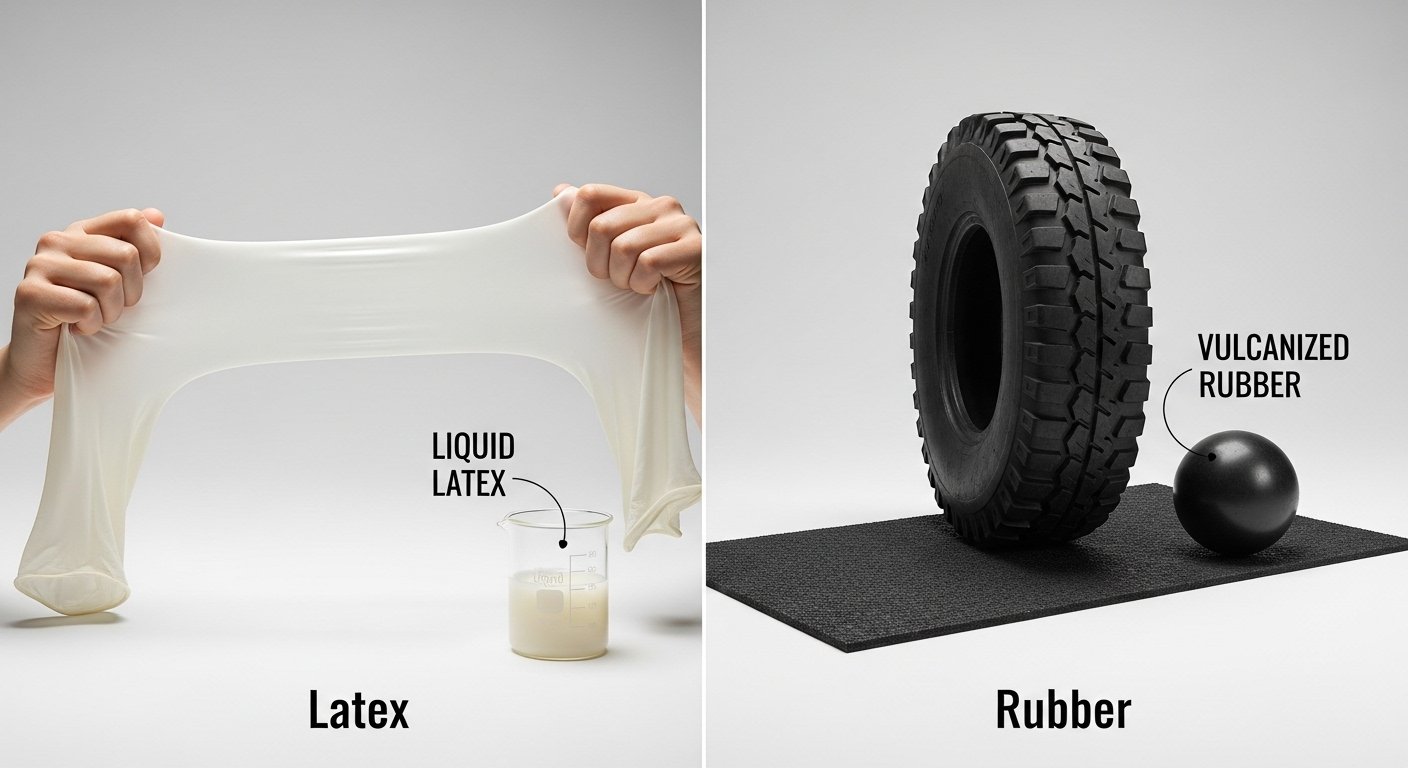
Imagine buying a pair of gloves or a mattress. Some products are labeled latex, while others are called rubber. Many people assume these terms mean the same thing, but there is a clear difference between latex and rubber.
The difference between latex and rubber lies in their form and processing. Latex is a natural liquid extracted from rubber trees, while rubber is the solid material produced after processing latex or through synthetic methods. Understanding the difference between latex and rubber helps consumers choose the right material for products like gloves, tires, and medical equipment. Learning the difference between latex and rubber also helps in industries such as manufacturing, healthcare, and construction.
Key Difference Between the Two
The main difference is their form and state.
Latex is a liquid (milky sap), while rubber is a solid material made from processed latex or synthetic compounds.
Why Their Difference Is Necessary to Know
Knowing the difference is important for product selection and safety. For example, some people are allergic to latex but may tolerate certain types of synthetic rubber. Manufacturers also need to understand these differences to produce materials with specific properties like flexibility, durability, or resistance to heat. Understanding the difference between latex and rubber helps in choosing the right material for medical, industrial, and everyday use.
Pronunciation (US & UK)
Latex
- US: /ˈleɪ.teks/
- UK: /ˈleɪ.teks/
Rubber
- US: /ˈrʌb.ɚ/
- UK: /ˈrʌb.ə/
Before exploring further, let’s examine the detailed difference between latex and rubber.
Difference Between Latex and Rubber
1. Definition
Latex is a natural liquid substance.
Rubber is a solid elastic material.
Latex Examples
- Milky sap from rubber trees.
- Liquid used to make gloves.
Rubber Examples
- Solid material used in tires.
- Elastic products like bands.
2. Source
Latex is obtained directly from trees such as Hevea brasiliensis.
Rubber can be natural or synthetic.
Latex Examples
- Extracted by tapping rubber trees.
- Raw natural material.
Rubber Examples
- Natural rubber from latex.
- Synthetic rubber from chemicals.
3. Physical State
Latex is liquid or semi-liquid.
Rubber is solid.
Latex Examples
- Flowing milky liquid.
- Used in liquid form for coatings.
Rubber Examples
- Firm but flexible material.
- Used in finished products.
4. Processing
Latex requires processing to become rubber.
Rubber is the result of processing latex or synthetic production.
Latex Examples
- Collected and stabilized.
- Used in dipped products.
Rubber Examples
- Vulcanized for strength.
- Shaped into final products.
5. Types
Latex is mostly natural.
Rubber can be natural or synthetic.
Latex Examples
- Natural latex.
- Liquid latex compounds.
Rubber Examples
- Natural rubber.
- Synthetic rubber like neoprene.
6. Uses
Latex is used in liquid-based applications.
Rubber is used in solid products.
Latex Examples
- Medical gloves.
- Paints and adhesives.
Rubber Examples
- Tires and footwear.
- Seals and gaskets.
7. Flexibility
Latex is flexible in liquid form.
Rubber is flexible in solid form.
Latex Examples
- Easily spread or molded.
- Coating applications.
Rubber Examples
- Stretchable rubber bands.
- Shock-absorbing materials.
8. Allergy Risk
Latex can cause allergies in some people.
Rubber (especially synthetic) may reduce allergy risk.
Latex Examples
- Latex allergy in medical settings.
- Sensitivity to natural proteins.
Rubber Examples
- Synthetic rubber gloves.
- Alternative materials for sensitive users.
9. Durability
Latex is less durable in raw form.
Rubber is highly durable after processing.
Latex Examples
- Sensitive to environmental conditions.
- Requires preservation.
Rubber Examples
- Long-lasting tires.
- Weather-resistant materials.
10. Industrial Importance
Latex is a raw material.
Rubber is a finished industrial product.
Latex Examples
- Used in manufacturing processes.
- Base material for rubber products.
Rubber Examples
- Used in automotive and construction industries.
- Widely used in consumer goods.
Nature and Behaviour
Latex: Natural, liquid, and raw material used as the starting point for many products.
Rubber: Processed, solid, and durable material used in a wide range of industries.
Why People Are Confused About Their Use
People often confuse latex and rubber because latex is the source of natural rubber. Since both are closely related, the terms are sometimes used interchangeably in everyday language.
Table: Difference and Similarity Between Latex and Rubber
| Feature | Latex | Rubber | Similarity |
| State | Liquid | Solid | Flexible materials |
| Source | Natural tree sap | Natural or synthetic | Used in industry |
| Processing | Raw material | Processed product | Related materials |
| Use | Coatings, gloves | Tires, tools | Elastic properties |
| Allergy | Common | Less common (synthetic) | Used in products |
Which Is Better in What Situation?
Latex (100 words)
Latex is better when a liquid or flexible coating material is needed. It is commonly used in products like medical gloves, paints, adhesives, and molded items. Latex allows manufacturers to create thin, flexible layers and detailed shapes. It is especially useful in applications where elasticity and precision are important. However, users must be cautious about allergies when choosing latex-based products.
Rubber (100 words)
Rubber is better for durable, long-lasting products that require strength and flexibility. It is widely used in tires, footwear, industrial seals, and many everyday items. Rubber’s solid form makes it suitable for heavy-duty applications where resistance to wear and environmental conditions is important. Synthetic rubber options also provide alternatives for people with latex allergies.
Use in Metaphors and Similes
- “His patience stretched like rubber.”
- “The material was as smooth as latex.”
Connotative Meaning
Latex
- Positive: Natural, flexible
- Neutral: Raw material
Rubber
- Positive: Strong, durable
- Neutral: Industrial material
Idioms or Proverbs
“Rubber meets the road” – the point where action begins
Example: The project plan is ready; now the rubber meets the road.
Works in Literature
These terms appear mainly in scientific and industrial contexts:
- “Introduction to Polymer Science” – Academic reference
- “Materials Science and Engineering” – Textbook
Movies Related to Industry or Materials
- The Founder – Business and industry themes
- Flash of Genius – Innovation and invention
Frequently Asked Questions
1. Is latex the same as rubber?
No, latex is a liquid, while rubber is the solid material made from it.
2. Can rubber be made without latex?
Yes, synthetic rubber is made from chemicals.
3. Why do people have latex allergies?
Because of proteins found in natural latex.
4. Which is more durable?
Rubber is more durable than raw latex.
5. Are all rubber products made from latex?
No, some are made from synthetic materials.
How Both Are Useful for the Surroundings
Latex and rubber are essential materials in modern life, used in healthcare, transportation, construction, and everyday products.
Final Words
Latex and rubber are closely related but serve different roles in material science.
Conclusion
Understanding the difference between latex and rubber helps consumers and industries choose the right material for various applications. Latex is the natural liquid extracted from rubber trees, while rubber is the processed solid material used in a wide range of products. Although they are closely connected, their form, properties, and uses differ significantly. Recognizing the difference between latex and rubber ensures better product selection, safety, and awareness in both everyday life and industrial applications.