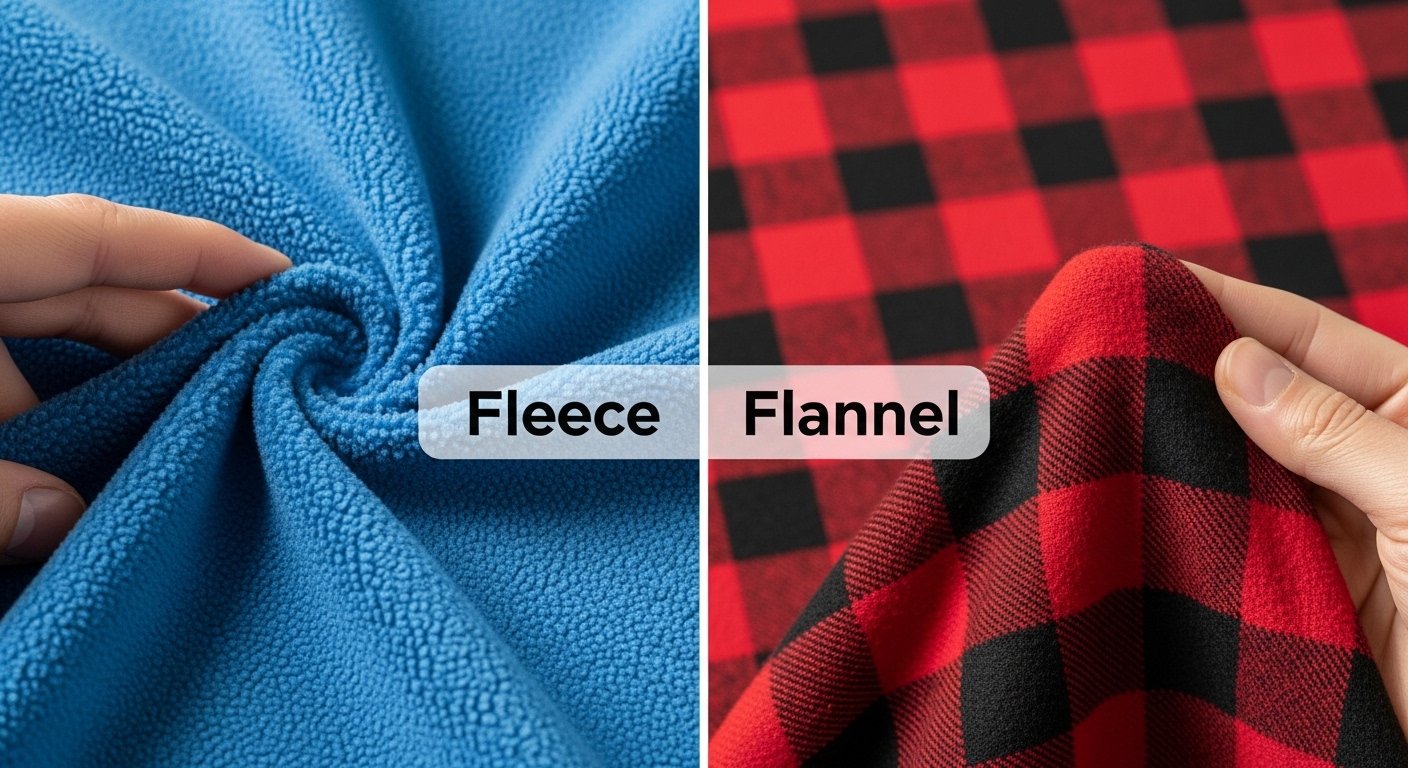
Imagine a cold winter morning. A child wears a soft jacket to stay warm. The jacket feels fluffy and light. This fabric is often fleece. Fleece is a soft, warm fabric usually made from synthetic materials like polyester.
Now imagine another child wearing a warm shirt with a check pattern. The shirt feels soft but is made from cotton or wool. This fabric is called flannel. Flannel is a soft, woven cloth often used for shirts, pajamas, and blankets.
The difference between fleece and flannel is mainly about the material and texture. Fleece is usually made from synthetic fibers, while flannel is usually made from cotton or wool. Learning the difference between fleece and flannel helps people choose the right clothing for cold weather. The difference between fleece and flannel is also useful for students learning about fabrics and fashion. Understanding the difference between fleece and flannel makes shopping for warm clothes easier.
Key Difference Between the Both
The main difference between fleece and flannel is the material.
- Fleece is usually made from synthetic fibers like polyester.
- Flannel is usually made from natural fibers like cotton or wool.
Why Their Difference Is Important for Learners and Experts
Knowing the difference between fleece and flannel helps people choose the right fabric for comfort and warmth. Students studying clothing materials learn how fabrics are made. Designers and clothing experts use this knowledge to create warm and comfortable clothes.
In society, both fabrics are important for winter clothing, blankets, and outdoor wear.
Pronunciation
Fleece
US: /fliːs/
UK: /fliːs/
Flannel
US: /ˈflæn.əl/
UK: /ˈflæn.əl/
Linking Hook
Now that we understand the meanings of these fabrics, let us explore the difference between fleece and flannel in simple points.
Difference Between Fleece and Flannel
1. Material
Fleece:
Usually made from synthetic fibers.
Examples:
- Polyester fleece jackets
- Synthetic fleece blankets
Flannel:
Usually made from natural fibers.
Examples:
- Cotton flannel shirts
- Wool flannel trousers
2. Texture
Fleece:
Very fluffy and soft.
Examples:
- Soft fleece hoodies
- Plush fleece blankets
Flannel:
Soft but smoother and flatter.
Examples:
- Brushed cotton flannel shirts
- Soft flannel pajamas
3. Warmth
Fleece:
Very warm and good for cold weather.
Examples:
- Winter fleece jackets
- Outdoor fleece sweaters
Flannel:
Warm but lighter.
Examples:
- Flannel sleepwear
- Flannel shirts for mild winter
4. Weight
Fleece:
Light but thick.
Examples:
- Lightweight fleece jackets
- Light fleece blankets
Flannel:
Usually heavier than fleece shirts but thinner.
Examples:
- Thick flannel shirts
- Flannel bedding
5. Breathability
Fleece:
Less breathable.
Examples:
- May feel warm quickly during activity
- Good for outdoor cold weather
Flannel:
More breathable.
Examples:
- Comfortable indoor clothing
- Good for sleepwear
6. Water Resistance
Fleece:
Dries quickly and resists moisture.
Examples:
- Good for hiking jackets
- Outdoor sports clothing
Flannel:
Absorbs water more easily.
Examples:
- Cotton flannel gets wet quickly
- Needs longer drying time
7. Appearance
Fleece:
Looks fluffy and smooth.
Examples:
- Plain fleece jackets
- Solid color fleece hoodies
Flannel:
Often has check or plaid patterns.
Examples:
- Red plaid flannel shirts
- Patterned flannel pajamas
8. Uses
Fleece:
Used for jackets, hoodies, and blankets.
Examples:
- Winter sports clothing
- Camping blankets
Flannel:
Used for shirts, pajamas, and bedding.
Examples:
- Flannel sleepwear
- Flannel bedsheets
9. Care
Fleece:
Easy to wash and quick to dry.
Examples:
- Machine-washable jackets
- Fast-drying fleece blankets
Flannel:
Needs gentle care.
Examples:
- Cotton flannel may shrink
- Requires careful washing
10. Cost
Fleece:
Often cheaper because it is synthetic.
Examples:
- Affordable fleece jackets
- Low-cost fleece blankets
Flannel:
Sometimes more expensive.
Examples:
- High-quality cotton flannel shirts
- Wool flannel clothing
Nature and Behaviour of Both
Fleece is lightweight, warm, and synthetic. It is popular for sportswear and outdoor clothing.
Flannel is a soft woven fabric made from natural fibers and is often used for comfortable everyday clothing.
Why People Are Confused
People are confused because both fabrics are soft and warm and are often used in winter clothing. However, their materials and textures are different.
Table: Difference and Similarity
| Feature | Fleece | Flannel | Similarity |
| Material | Synthetic | Cotton or wool | Both are soft fabrics |
| Texture | Fluffy | Smooth brushed | Both feel warm |
| Uses | Jackets and blankets | Shirts and pajamas | Both used in winter |
| Breathability | Lower | Higher | Both comfortable |
Which Is Better in What Situation?
Fleece is better for outdoor activities in cold weather. It keeps the body very warm and dries quickly. This makes it perfect for hiking, camping, and winter sports.
Flannel is better for everyday clothing and sleepwear. It feels soft on the skin and allows more air to pass through, making it comfortable for indoor wear.
Metaphors and Similes
- Fleece is like a warm cloud wrapped around your body.
- Flannel is like a soft cozy shirt for winter days.
Connotative Meaning
Fleece
Positive: warmth and comfort
Neutral: synthetic fabric
Negative: may trap heat
Example:
“She wore a fleece jacket on the cold morning.”
Flannel
Positive: comfort and coziness
Neutral: cotton winter fabric
Negative: may shrink after washing
Example:
“He wore a flannel shirt during autumn.”
Idioms or Proverbs
“Warm as toast.”
Example: The fleece jacket kept her warm as toast.
“Comfort like home.”
Example: His flannel pajamas felt like comfort at home.
Works in Literature
- Little Women – Louisa May Alcott (Novel, 1868) – mentions flannel clothing
- Walden – Henry David Thoreau (Philosophy/Nature, 1854)
Movies Related to Winter Clothing Themes
- Frozen (2013, USA)
- The Revenant (2015, USA)
Frequently Asked Questions
1. Is fleece warmer than flannel?
Yes, fleece is usually warmer.
2. Is flannel made from cotton?
Yes, flannel is often made from cotton.
3. Is fleece natural or synthetic?
Fleece is usually synthetic.
4. Which is better for pajamas?
Flannel is better for pajamas.
5. Which is better for outdoor sports?
Fleece is better for outdoor sports.
How Both Are Useful for Surroundings
Fleece and flannel both help people stay warm in cold weather. They are used in clothing, blankets, and bedding, making winter more comfortable.
Final Words for Both
Fleece and flannel are both soft and warm fabrics, but they are made from different materials and used in different ways.
Conclusion
The difference between fleece and flannel mainly depends on the material, texture, and use of the fabrics. Fleece is a synthetic fabric that is very warm, lightweight, and often used for jackets and outdoor clothing. Flannel is usually made from cotton or wool and is commonly used for shirts, pajamas, and bedding. Both fabrics provide warmth and comfort during cold weather. Understanding the difference between fleece and flannel helps students, shoppers, and clothing designers choose the right fabric for different situations.