Imagine visiting a Mexican restaurant for the first time. The menu offers both fajitas and tacos, and they seem quite similar; both include tortillas, meat, and delicious fillings. However, there is a clear difference between fajitas and tacos in how they are prepared, served, and eaten.
The difference between fajitas and tacos is mainly about presentation and cooking style. Fajitas are typically served as a sizzling dish with separate ingredients that you assemble yourself, while tacos are pre-assembled and ready to eat. Understanding the difference between fajitas and tacos helps food lovers choose the right dish and enjoy authentic Mexican cuisine. Learning the difference between fajitas and tacos also helps people appreciate cultural cooking traditions.
Key Difference Between the Two
The main difference is their serving style.
Fajitas are served with ingredients separated for self-assembly, while tacos are usually served already filled and ready to eat.
Why Their Difference Is Necessary to Know
Knowing the difference is helpful for food enthusiasts, travelers, and restaurant customers. When ordering at a restaurant, understanding what each dish includes can improve the dining experience. For example, someone who enjoys customizing their meal might prefer fajitas, while someone who wants a quick, ready-to-eat option might choose tacos. Understanding the difference between fajitas and tacos also helps in cooking these dishes at home correctly.
Pronunciation (US & UK)
Fajitas
- US: /fəˈhiː.təz/
- UK: /fəˈhiː.təz/
Tacos
- US: /ˈtɑː.koʊz/
- UK: /ˈtæk.əʊz/
Before exploring further, let’s examine the detailed difference between fajitas and tacos.
Difference Between Fajitas and Tacos
1. Serving Style
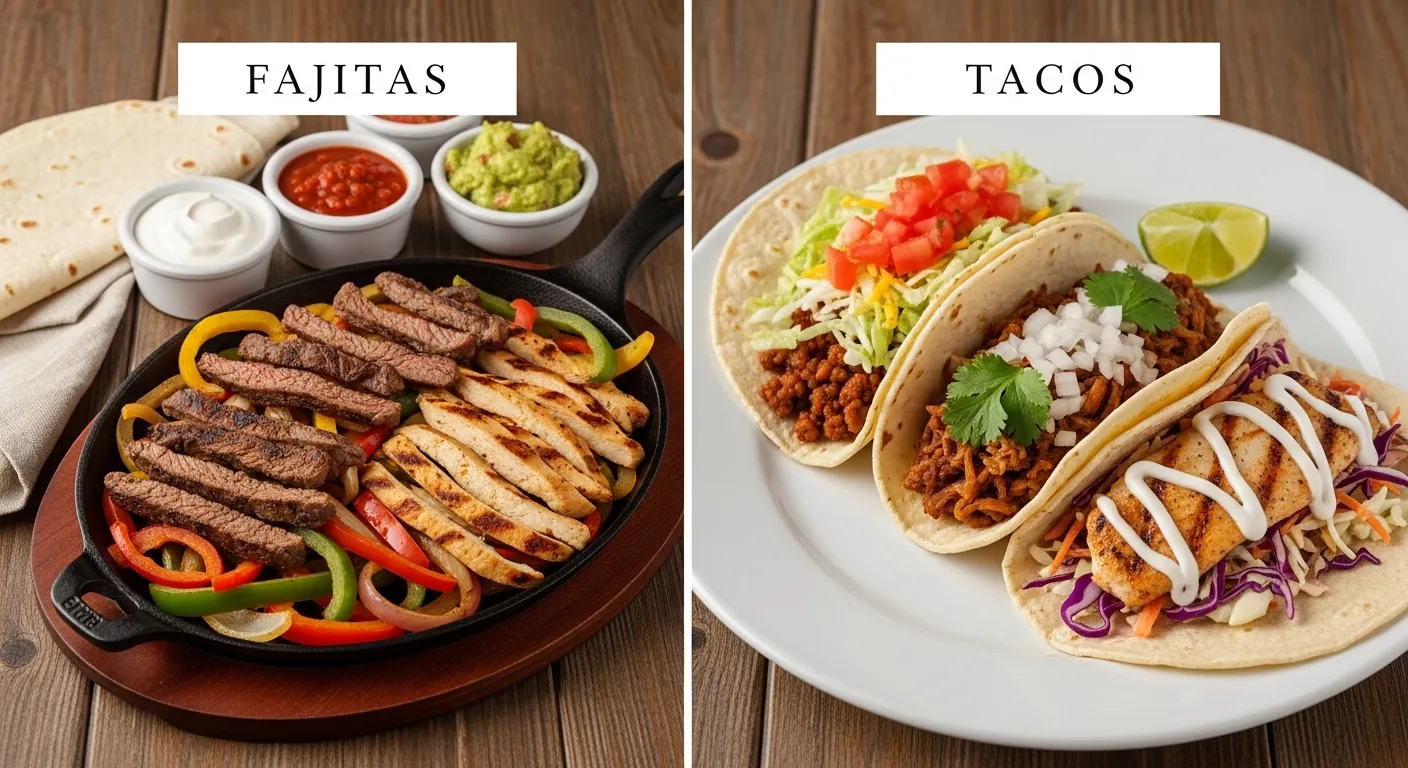
Fajitas are served deconstructed.
Tacos are served assembled.
Fajitas Examples
- Sizzling pan with meat and vegetables.
- Tortillas are served separately on the side.
Tacos Examples
- Ready-to-eat tortilla filled with meat and toppings.
- Served directly on a plate.
2. Cooking Method
Fajitas are grilled and served hot on a skillet.
Tacos can be grilled, fried, or soft.
Fajitas Examples
- Grilled chicken with peppers and onions.
- Served on a hot iron plate.
Tacos Examples
- Soft tacos with grilled meat.
- Crispy tacos are fried until crunchy.
3. Ingredients
Fajitas usually include sautéed peppers and onions.
Tacos have a wider variety of fillings.
Fajitas Examples
- Chicken or beef with bell peppers.
- Served with sour cream and guacamole.
Tacos Examples
- Beef, chicken, fish, or beans.
- Topped with lettuce, cheese, salsa, or sauce.
4. Tortilla Type
Fajitas often use flour tortillas.
Tacos commonly use corn tortillas (but can also use flour).
Fajitas Examples
- Soft flour tortillas.
- Larger tortillas for wrapping.
Tacos Examples
- Small corn tortillas.
- Hard taco shells.
5. Size
Fajitas are usually larger wraps.
Tacos are smaller and eaten individually.
Fajitas Examples
- Large tortilla wraps filled with ingredients.
- One or two wraps per serving.
Tacos Examples
- Small handheld portions.
- Often served in sets of three or more.
6. Eating Style
Fajitas require assembling before eating.
Tacos are eaten immediately.
Fajitas Examples
- Adding fillings to a tortilla yourself.
- Customizing each bite.
Tacos Examples
- Pick up and eat directly.
- No preparation needed at the table.
7. Origin
Fajitas originated from Tex-Mex cuisine.
Tacos come from traditional Mexican cuisine.
Fajitas Examples
- Popular in Texas-style cooking.
- Often served in American-Mexican restaurants.
Tacos Examples
- Traditional Mexican street food.
- Common across Mexico.
8. Presentation
Fajitas are served sizzling and dramatic.
Tacos are simple and ready-made.
Fajitas Examples
- Served on a hot skillet with steam.
- Ingredients are arranged separately.
Tacos Examples
- Served neatly on a plate.
- Already filled and folded.
9. Customization
Fajitas offer more customization.
Tacos have fixed fillings.
Fajitas Examples
- Choose amount of meat and toppings.
- Add sauces as desired.
Tacos Examples
- Pre-determined fillings.
- Limited customization after serving.
10. Dining Experience
Fajitas provide an interactive dining experience.
Tacos offer convenience and speed.
Fajitas Examples
- Shared meal with friends or family.
- Hands-on preparation.
Tacos Examples
- Quick meal or street food.
- Easy to eat on the go.
Nature and Behaviour
Fajitas: Interactive, customizable, and served hot with separate ingredients.
Tacos: Convenient, ready-to-eat, and widely varied in flavor and style.
Why People Are Confused About Their Use
People often confuse fajitas and tacos because both use tortillas and similar fillings like meat, vegetables, and sauces. However, their preparation and serving styles are quite different.
Table: Difference and Similarity Between Fajitas and Tacos
| Feature | Fajitas | Tacos | Similarity |
| Serving style | Deconstructed | Pre-assembled | Use tortillas |
| Origin | Tex-Mex | Mexican | Popular worldwide |
| Tortilla | Usually flour | Usually corn | Can use both |
| Size | Larger | Smaller | Filled with ingredients |
| Eating style | DIY assembly | Ready to eat | Handheld foods |
Which Is Better in What Situation?
Fajitas (100 words)
Fajitas are best for social dining and shared meals. They are perfect when you want an interactive experience where everyone can build their own wraps according to taste. The sizzling presentation and fresh ingredients make fajitas enjoyable for family dinners or gatherings. People who like customizing their food with different toppings and sauces often prefer fajitas.
Tacos (100 words)
Tacos are ideal for quick meals and convenience. They are perfect for busy days when you want something delicious and easy to eat without preparation. Tacos are also popular as street food and snacks because they are portable and come in many flavors. People who enjoy traditional Mexican cuisine and fast service often choose tacos.
Use in Metaphors and Similes
- “Life is like fajitas—you build it your own way.”
- “His schedule was as packed as a plate of tacos.”
Connotative Meaning
Fajitas
- Positive: Fun, interactive, customizable
- Neutral: Tex-Mex dish
Tacos
- Positive: Quick, tasty, convenient
- Neutral: Traditional Mexican food
Idioms or Proverbs
No direct idioms exist, but food expressions can be used creatively.
Example:
- “Spice up your life like a taco night.”
Works in Literature
Food-related discussions appear in culinary books:
- “The Complete Mexican Cookbook” – Various authors
- “Tex-Mex Cooking” – Culinary guide
Movies Related to Food Culture
- Chef – 2014, USA
- Ratatouille – 2007, USA
Frequently Asked Questions
1. Are fajitas the same as tacos?
No, fajitas are served deconstructed, while tacos are pre-assembled.
2. Which is more traditional?
Tacos are more traditional in Mexican cuisine.
3. Do fajitas always include vegetables?
Yes, they typically include peppers and onions.
4. Can tacos use flour tortillas?
Yes, although corn tortillas are more traditional.
5. Which is easier to eat?
Tacos are easier because they are ready to eat.
How Both Are Useful for the Surroundings
Both fajitas and tacos bring people together through food, culture, and shared dining experiences. They are popular worldwide and represent the richness of Mexican and Tex-Mex cuisine.
Final Words
Fajitas and tacos may look similar, but their preparation and serving styles make them unique.
Conclusion
Understanding the difference between fajitas and tacos helps food lovers enjoy these popular dishes more fully. Fajitas are interactive meals served with separate ingredients for customization, while tacos are ready-to-eat and convenient. Although both use tortillas and flavorful fillings, their origins, preparation methods, and dining experiences differ significantly. Recognizing the difference between fajitas and tacos allows people to appreciate both dishes and choose the one that best fits their taste and occasion.