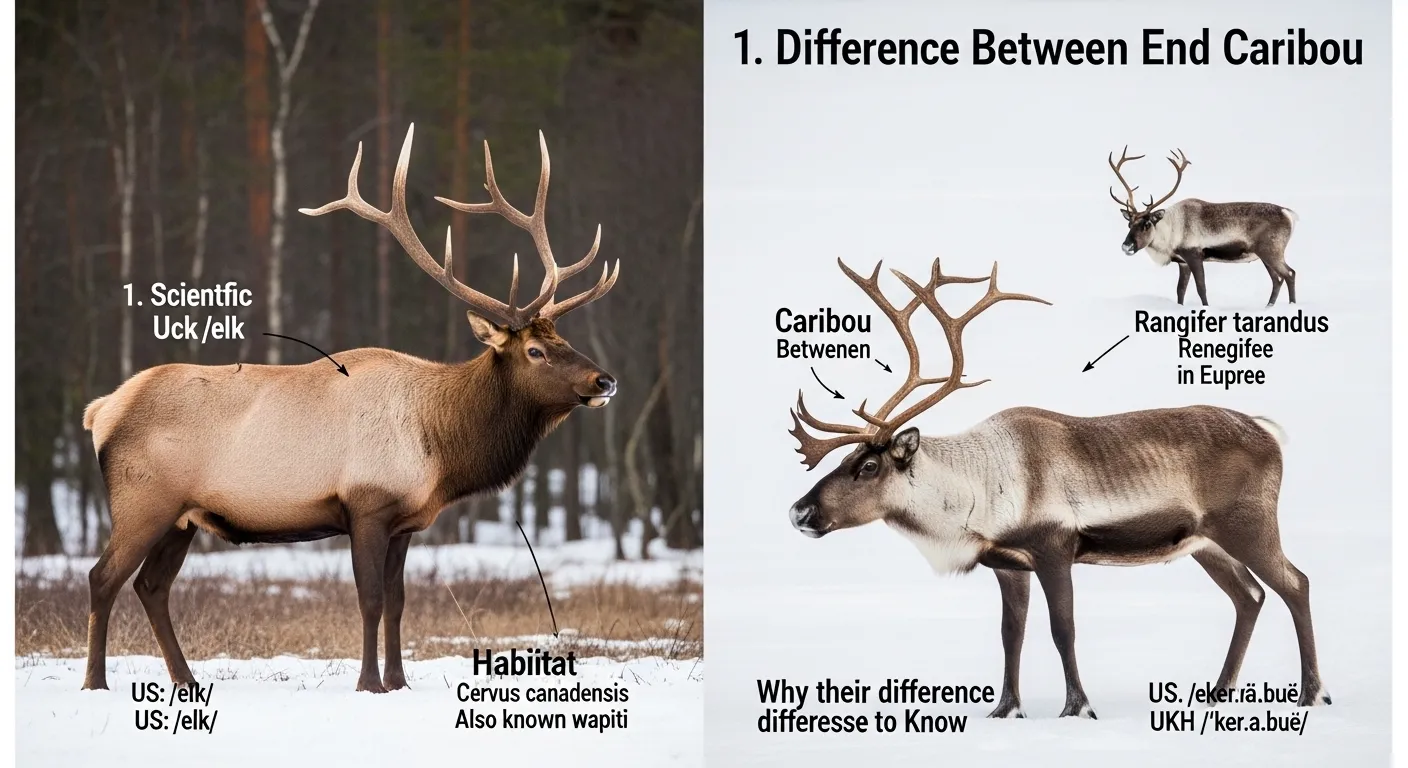
Imagine traveling through a forest or snowy tundra and spotting a large deer-like animal. You might wonder whether it is an elk or a caribou. Although they belong to the same deer family, there is a clear difference between elk and caribou.
The difference between elk and caribou lies in their physical features, habitat, and behavior. Elk are large, forest-dwelling animals, while caribou are adapted to cold, northern regions. Understanding the difference between elk and caribou helps wildlife enthusiasts, students, and travelers identify these animals correctly. Learning the difference between elk and caribou also provides insight into how animals adapt to different environments.
Key Difference Between the Two
The main difference is their habitat and antlers.
Elk live mainly in forests and grasslands and have long, branching antlers, while caribou live in Arctic regions and have broader, more compact antlers suited for snowy conditions.
Why Their Difference Is Necessary to Know
Knowing the difference is important for wildlife identification, conservation, and education. Hunters, researchers, and nature lovers need to correctly identify species for safety and ecological understanding. Understanding the difference between elk and caribou also helps explain how animals evolve to survive in different climates.
Pronunciation (US & UK)
Elk
- US: /elk/
- UK: /elk/
Caribou
- US: /ˈker.ɪ.buː/
- UK: /ˈkær.ɪ.buː/
Before exploring further, let’s examine the detailed difference between elk and caribou.
Difference Between Elk and Caribou
1. Scientific Identity
Elk and caribou belong to different species.
Elk Examples
- Cervus canadensis
- Also known as wapiti.
Caribou Examples
- Rangifer tarandus
- Known as reindeer in Europe.
2. Habitat
Elk prefer forests and grasslands.
Caribou live in Arctic and subarctic regions.
Elk Examples
- Mountains and meadows.
- Temperate forests.
Caribou Examples
- Tundra and snowy landscapes.
- Northern regions of Canada and Alaska.
3. Size and Body Shape
Elk are generally larger and taller.
Caribou are slightly smaller but stockier.
Elk Examples
- Tall and long-legged.
- Lean body structure.
Caribou Examples
- Shorter legs.
- Compact body for cold climates.
4. Antlers
Elk have long, branching antlers.
Caribou have wide, shovel-shaped antlers.
Elk Examples
- Thin and extended antlers.
- Used for fighting during mating season.
Caribou Examples
- Broad antlers for digging snow.
- Both males and females have antlers.
5. Gender Differences
Only male elk have antlers.
Both male and female caribou have antlers.
Elk Examples
- Bulls grow antlers.
- Females do not.
Caribou Examples
- Both genders grow antlers.
- Unique among deer species.
6. Diet
Both are herbivores but eat different plants.
Elk Examples
- Grass, leaves, and bark.
- Seasonal grazing.
Caribou Examples
- Lichens, moss, and shrubs.
- Adapted to limited vegetation.
7. Migration
Caribou migrate long distances.
Elk migrate shorter distances or stay local.
Elk Examples
- Seasonal movement in the mountains.
- Limited migration.
Caribou Examples
- Long migrations across tundra.
- One of the longest migrations among land animals.
8. Climate Adaptation
Elk prefer moderate climates.
Caribou are adapted to extreme cold.
Elk Examples
- Thick coat for winter but not extreme cold.
- Found in milder regions.
Caribou Examples
- Thick fur and specialized hooves.
- Built for icy conditions.
9. Behavior
Elk form large herds during certain seasons.
Caribou travel in massive migrating groups.
Elk Examples
- Social during mating season.
- Smaller herds.
Caribou Examples
- Huge herds during migration.
- Strong group behavior.
10. Cultural Significance
Caribou are important in Arctic cultures.
Elk are symbols of wilderness in North America.
Elk Examples
- Featured in wildlife tourism.
- Important for ecosystems.
Caribou Examples
- Vital for indigenous communities.
- Source of food, clothing, and tradition.
Nature and Behaviour
Elk: Large, graceful animals suited to forests and open lands.
Caribou: Hardy, cold-adapted animals built for survival in harsh Arctic environments.
Why People Are Confused About Their Use
People often confuse elk and caribou because both are large deer with antlers. In some regions, names like “reindeer” and “caribou” add to the confusion.
Table: Difference and Similarity Between Elk and Caribou
| Feature | Elk | Caribou | Similarity |
| Habitat | Forests & grasslands | Arctic tundra | Both are deer |
| Antlers | Long, branching | Broad, shovel-shaped | Used for defense |
| Gender Antlers | Males only | Both genders | Seasonal shedding |
| Size | Larger | Slightly smaller | Large mammals |
| Diet | Grass & leaves | Lichens & moss | Herbivores |
Which Is Better in What Situation?
Elk
Elk are better adapted to forest and grassland environments where food is abundant and climates are moderate. Their long legs help them move through forests and open terrain efficiently. Elk thrive in regions where they can graze on grasses and plants throughout the year. They are well-suited for mountainous and temperate ecosystems.
Caribou (
Caribou are better suited for extreme cold environments like the Arctic tundra. Their compact bodies, thick fur, and specialized hooves allow them to survive harsh winters and travel long distances. Caribou can dig through snow to find food, making them highly adapted to limited resources. Their migration patterns help them survive in changing seasonal conditions.
Use in Metaphors and Similes
- “Strong as an elk” (powerful and sturdy)
- “Moving like a herd of caribou” (large, coordinated movement)
Connotative Meaning
Elk
- Positive: Strength, grace
- Neutral: Wild animal
Caribou
- Positive: Endurance, survival
- Neutral: Arctic animal
Idioms or Proverbs
(No common idioms specifically use elk or caribou, but they appear in wildlife descriptions.)
Works in Literature
- “White Fang” – Jack London
- Arctic and wilderness themes involving caribou-like environments
Movies Related to Wildlife
- The Revenant – Features wilderness survival
- Frozen – Includes a reindeer character
Frequently Asked Questions
1. Is a caribou the same as a reindeer?
Yes, they are the same species but called differently in different regions.
2. Which is bigger, elk or caribou?
Elk are generally larger.
3. Do both have antlers?
Only male elk, but both male and female caribou.
4. Where do caribou live?
In Arctic and subarctic regions.
5. Are elk found in cold climates?
Yes, but not as extreme as caribou habitats.
How Both Are Useful for the Surroundings
Both animals play important roles in ecosystems by maintaining plant balance and supporting wildlife food chains.
Final Words
Elk and caribou are unique animals adapted to different environments.
Conclusion
Understanding the difference between elk and caribou helps in identifying these animals and appreciating their unique adaptations. Elk are large, forest-dwelling animals with long antlers, while caribou are cold-adapted animals with broad antlers suited for snowy environments. Although they belong to the same deer family, their habitat, behavior, and physical features differ significantly. Recognizing the difference between elk and caribou enhances knowledge of wildlife and nature.