A student once said, “I did a cake for my friend,” and the teacher gently corrected him: “You made a cake.” This simple mistake shows the common confusion in the difference between do and make. Both verbs are widely used in English, yet the difference between do and make depends on whether you are talking about performing an action or creating something new. Understanding the difference between do and make is essential for speaking and writing correctly. In daily life, the difference between do and make helps you express tasks, responsibilities, and creations more naturally and accurately.
Key Difference Between the Both
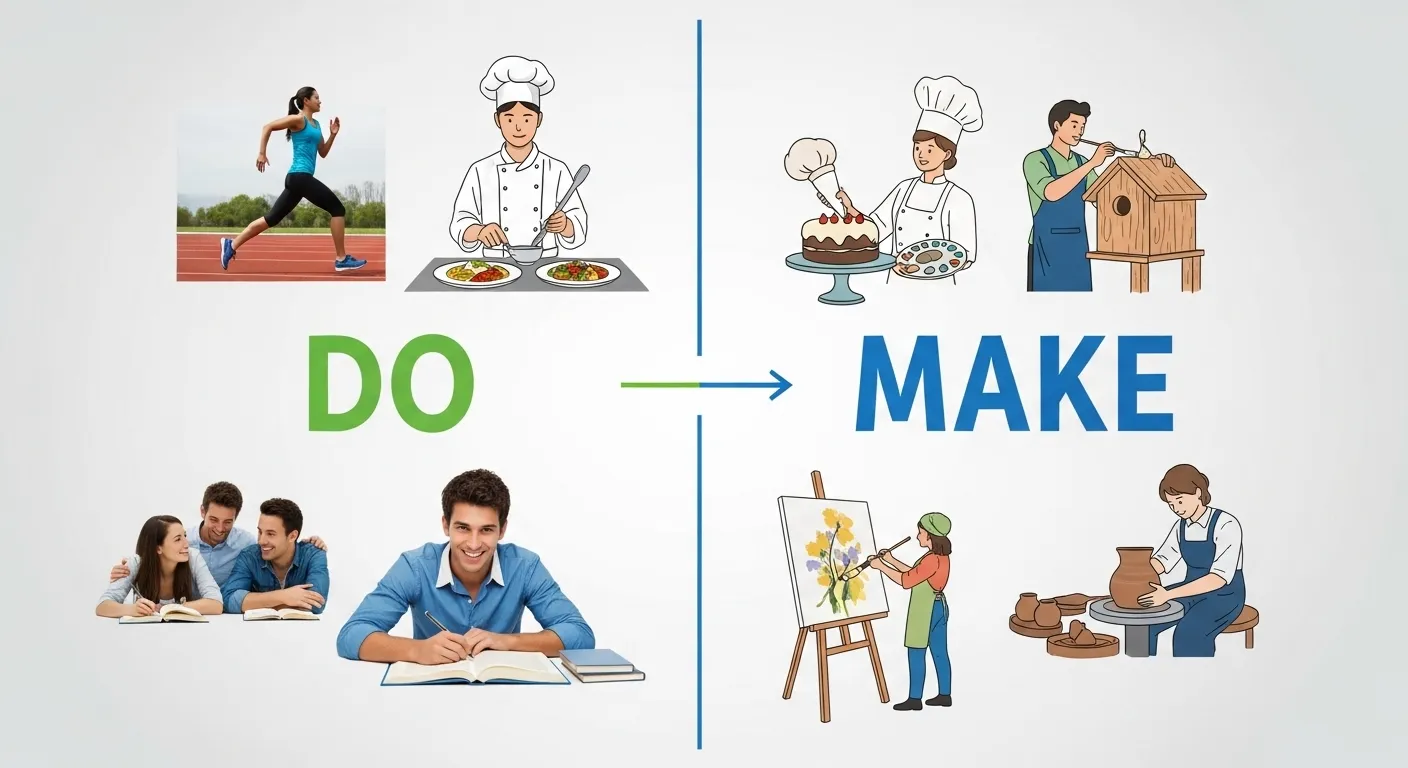
The main difference between do and make is:
- Do is used for actions, tasks, or activities.
- Make is used for creating, producing, or building something.
Why is the difference important to Know?
Understanding the difference between do and make improves grammar accuracy and communication skills. For learners, it prevents common mistakes in speaking and writing. For professionals, correct usage ensures clarity in communication. In society, proper language use builds confidence and avoids misunderstandings in everyday conversations.
Pronunciation (US & UK)
- Do
- US: /duː/
- UK: /duː/
- Make
- US: /meɪk/
- UK: /meɪk/
Linking Hook
Now, let’s explore the detailed difference between do and make with simple explanations and examples.
H2: Difference Between “Do” and “Make”
1. Basic Meaning
- Do: Act.
- Example 1: I do my homework daily.
- Example 2: She does the laundry.
- Make: Create something new.
- Example 1: I make a cake.
- Example 2: She makes a dress.
2. Type of Activity
- Do: General or routine tasks.
- Example 1: Do the dishes.
- Example 2: Do your job.
- Make: Product or result-based activity.
- Example 1: Make a plan.
- Example 2: Make a list.
3. Physical Creation
- Do: No physical object created.
- Example 1: Do exercise.
- Example 2: Do work.
- Make: Produces something tangible or intangible.
- Example 1: Make food.
- Example 2: Make a decision.
4. Use with Work
- Do: Used with work and tasks.
- Example 1: Do your work.
- Example 2: Do the assignment.
- Make: Not used with “work” in general.
- Example 1: Make a project.
- Example 2: Make a product.
5. Expressions
- Do: Common in fixed phrases.
- Example 1: Do your best.
- Example 2: Do someone a favor.
- Make: Also used in fixed phrases.
- Example 1: Make money.
- Example 2: Make a mistake.
6. Focus
- Do: Focus on the action.
- Example 1: Do something useful.
- Example 2: Do nothing.
- Make: Focus on the result.
- Example 1: Make progress.
- Example 2: Make a difference.
7. Collocations
- Do: Do homework, do business.
- Example 1: Do business with a company.
- Example 2: Do homework at night.
- Make: Make food, make arrangements.
- Example 1: Make dinner.
- Example 2: Make plans.
8. Usage in Questions
- Do: Used as an auxiliary verb.
- Example 1: Do you like tea?
- Example 2: Did he finish?
- Make: Not used as an auxiliary.
- Example 1: Make a call.
- Example 2: Make a request.
9. Formal vs Informal Use
- Do: Neutral and common.
- Example 1: Do tasks.
- Example 2: Do duties.
- Make: Slightly more specific.
- Example 1: Make arrangements.
- Example 2: Make improvements.
10. Error Patterns
- Do: Often overused by learners.
- Example 1: ❌ Do a cake
- Example 2: ❌ Do a decision
- Make: Correct for creation.
- Example 1: ✔ Make a cake
- Example 2: ✔ Make a decision
Nature and Behaviour
- Do: Action-oriented, general, and task-based.
- Make: Result-oriented, creative, and production-based.
Why People Are Confused?
People confuse “do” and “make” because both verbs can describe activities. Their meanings overlap in some contexts, and English uses many fixed expressions that must be memorized.
Comparison Table
| Feature | Do | Make | Similarity |
| Meaning | Perform action | Create something | Both are verbs |
| Focus | Activity | Result | Used in daily speech |
| Usage | Tasks, work | Creation, production | Form expressions |
| Example | Do homework | Make a cake | Common in English |
| Grammar Role | Main & auxiliary verb | Main verb only | Essential verbs |
Which Is Better in What Situation?
Do is better when talking about tasks, responsibilities, or general activities. It is commonly used for routine actions like work, homework, or chores. If there is no clear result or product, “do” is usually the correct choice.
Make is better when referring to creating or producing something. It is used when there is a clear result, such as food, plans, or decisions. Whenever something new is formed, “make” is the appropriate verb.
Metaphors and Similes
- Do: “Like completing a checklist.”
- Make: “Like building something from scratch.”
Connotative Meanings
- Do: Neutral and practical
- Make: Creative and productive (positive)
Idioms and Proverbs
- Do: “Do your best”
- Example: Always do your best in exams.
- Make: “Make ends meet”
- Example: It’s hard to make ends meet these days.
Works in Literature
- Commonly used in all English literature and grammar books (various authors)
Movies Related to the Topic
- Not specific, but widely used in English dialogue across films
FAQs
1. Can “do” and “make” be interchangeable?
No, they are used in different contexts.
2. Why do learners confuse them?
Because both describe actions.
3. Which is used for homework?
“Do homework” is correct.
4. Which is used for food?
“Make food” is correct.
5. Is “make a mistake” correct?
Yes, it is a common expression.
How Both Are Useful for Society
Both verbs are essential for communication, helping people describe actions and creations clearly in everyday life.
Final Words for Both
“Do” and “make” are simple yet powerful verbs that shape how we express actions and results.
Conclusion
In conclusion, the difference between do and make lies in action versus creation. “Do” focuses on performing tasks, while “make” emphasizes producing results. Understanding the difference between do and make helps you communicate more clearly and avoid common mistakes, making your English more natural and effective.