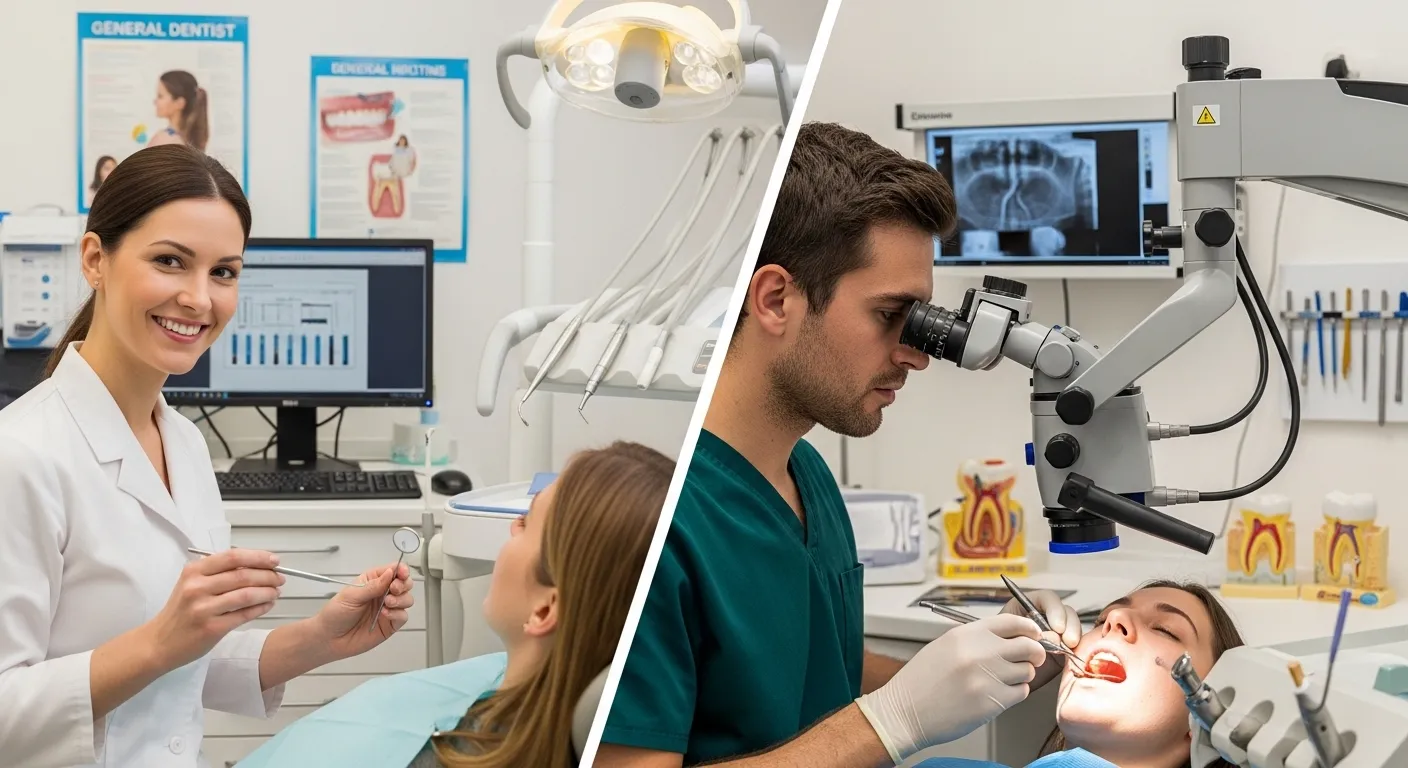
Imagine you have a toothache. You visit a dental clinic, and the receptionist asks whether you want to see a dentist or an endodontist. Many people feel confused because both deal with teeth, but there is a clear difference between dentist and endodontist.
A dentist provides general oral care, including cleaning, fillings, and basic treatments. An endodontist, however, is a specialist who focuses on problems inside the tooth, especially root canals. Understanding the difference between dentist and an endodontist helps patients choose the right professional for their dental needs. Learning the difference between dentist and endodontist also ensures better treatment and faster recovery.
Key Difference Between the Both
The main difference is their level of specialization.
A dentist provides general dental care, while an endodontist is a specialist trained to treat issues related to the inner part of the tooth (pulp), especially root canal treatments.
Why Their Difference Is Necessary to Know
Knowing the difference is important for proper dental care. If a patient has a routine issue like cleaning or a cavity, a dentist is the right choice. However, for severe tooth pain, infections, or root canal procedures, an endodontist is more suitable. Understanding the difference between dentist and endodontist helps patients avoid delays in treatment and ensures they receive specialized care when needed.
Pronunciation (US & UK)
Dentist
- US: /ˈden.tɪst/
- UK: /ˈden.tɪst/
Endodontist
- US: /ˌen.doʊˈdɑːn.tɪst/
- UK: /ˌen.dəʊˈdɒn.tɪst/
Before exploring further, let’s examine the detailed difference between a dentist and an endodontist.
Difference Between a Dentist and an Endodontist
1. Scope of Practice
Dentists provide general oral healthcare.
Endodontists focus on specialized tooth treatments.
Dentist Examples
- Routine dental check-ups.
- Teeth cleaning and fillings.
Endodontist Examples
- Root canal treatment.
- Treating tooth pulp infections.
2. Level of Training
Dentists complete general dental education.
Endodontists receive additional specialized training.
Dentist Examples
- Dental school graduate.
- General practitioner.
Endodontist Examples
- Additional 2–3 years of specialty training.
- Expert in root canal procedures.
3. Type of Treatments
Dentists handle a wide range of dental procedures.
Endodontists focus on internal tooth problems.
Dentist Examples
- Fillings and crowns.
- Gum care and oral hygiene.
Endodontist Examples
- Root canal therapy.
- Retreatment of failed root canals.
4. Area of Focus
Dentists focus on overall oral health.
Endodontists focus on the inside of the tooth.
Dentist Examples
- Teeth, gums, and mouth health.
- Preventive care.
Endodontist Examples
- Tooth pulp and root tissues.
- Infection inside the tooth.
5. Equipment and Technology
Dentists use standard dental tools.
Endodontists use advanced technology.
Dentist Examples
- Basic dental instruments.
- X-rays for general diagnosis.
Endodontist Examples
- Microscopes for detailed procedures.
- Specialized root canal tools.
6. Complexity of Cases
Dentists handle routine and moderate cases.
Endodontists handle complex dental problems.
Dentist Examples
- Minor cavities.
- Regular dental maintenance.
Endodontist Examples
- Severe tooth infections.
- Complicated root canal cases.
7. Patient Referral
Dentists often treat patients directly.
Endodontists usually receive referrals.
Dentist Examples
- First point of contact for patients.
- Regular visits.
Endodontist Examples
- Referred by dentists.
- Specialist consultation.
8. Frequency of Visits
Dentists are visited regularly.
Endodontists are visited when needed.
Dentist Examples
- Check-ups every 6 months.
- Preventive care visits.
Endodontist Examples
- Visits for severe tooth issues.
- Not routine appointments.
9. Goal of Treatment
Dentists aim to maintain overall oral health.
Endodontists aim to save natural teeth.
Dentist Examples
- Prevent dental problems.
- Maintain healthy teeth and gums.
Endodontist Examples
- Preserve infected or damaged teeth.
- Eliminate tooth pain.
10. Common Procedures
Dentists perform general procedures.
Endodontists perform specialized procedures.
Dentist Examples
- Teeth whitening.
- Dental fillings.
Endodontist Examples
- Root canal therapy.
- Endodontic surgery.
Nature and Behaviour
Dentist: A general healthcare provider focused on prevention, maintenance, and overall oral hygiene.
Endodontist: A specialist focused on diagnosing and treating pain and diseases inside the tooth.
Why People Are Confused About Their Use
People often confuse these roles because both professionals treat teeth and work in dental clinics. However, their level of expertise and type of treatments differ significantly.
Table: Difference and Similarity Between Dentist and Endodontist
| Feature | Dentist | Endodontist | Similarity |
| Role | General dental care | Specialized care | Both treat teeth |
| Training | Basic dental degree | Additional specialization | Medical professionals |
| Focus | Whole mouth | Inside of tooth | Improve oral health |
| Visits | Regular | Occasional | Work in clinics |
| Procedures | Cleaning, fillings | Root canals | Use dental tools |
Which Is Better in What Situation?
Dentist (100 words)
A dentist is the best choice for routine dental care and general oral health maintenance. Regular check-ups, cleanings, and minor treatments such as fillings are handled effectively by dentists. They help prevent dental problems before they become serious and guide patients on proper oral hygiene. For everyday dental needs, a dentist is the first professional to visit.
Endodontist (100 words)
An endodontist is the best choice for complex dental problems involving the inside of the tooth. If a patient experiences severe tooth pain, infection, or requires a root canal, an endodontist provides specialized care. Their advanced training and equipment allow them to treat difficult cases and save natural teeth. For specialized treatment, an endodontist is the right expert.
Use in Metaphors and Similes
- “A dentist maintains your smile, while an endodontist saves it.”
- “Fixing the problem early is like visiting a dentist before needing an endodontist.”
Connotative Meaning
Dentist
- Positive: Care, prevention, health
- Neutral: General oral healthcare provider
Endodontist
- Positive: Expertise, precision, specialized care
- Neutral: Dental specialist
Idioms or Proverbs
While no direct idioms exist, common sayings include:
“Prevention is better than cure.”
Example: Regular dentist visits help avoid serious treatments by an endodontist.
Works in Medical Literature
- “Endodontics: Principles and Practice” – Dental textbook, Mahmoud Torabinejad
- “Clinical Dentistry” – General dental reference
Movies Related to Dentistry
- Finding Nemo – Features a dentist character
- Little Shop of Horrors – Features a dentist character
Frequently Asked Questions
1. Can a dentist perform a root canal?
Yes, but complex cases are often referred to an endodontist.
2. Do I need a referral to see an endodontist?
Usually yes, but it depends on the clinic.
3. Which is more specialized?
An endodontist is more specialized.
4. Should I visit a dentist first?
Yes, dentists are usually the first point of contact.
5. Are endodontists more expensive?
They may charge more due to specialized treatment.
How Both Are Useful for the Surroundings
Both dentists and endodontists play essential roles in maintaining oral health and improving quality of life by preventing and treating dental problems.
Final Words
Dentists and endodontists work together to ensure complete dental care.
Conclusion
Understanding the difference between dentist and endodontist helps patients make informed decisions about their oral health. Dentists provide general care and preventive treatments, while endodontists specialize in treating complex issues inside the tooth, especially root canal procedures. Although both professionals are important in dental care, their roles are distinct. Recognizing the difference between dentist and endodontist ensures timely treatment, better outcomes, and healthier smiles.