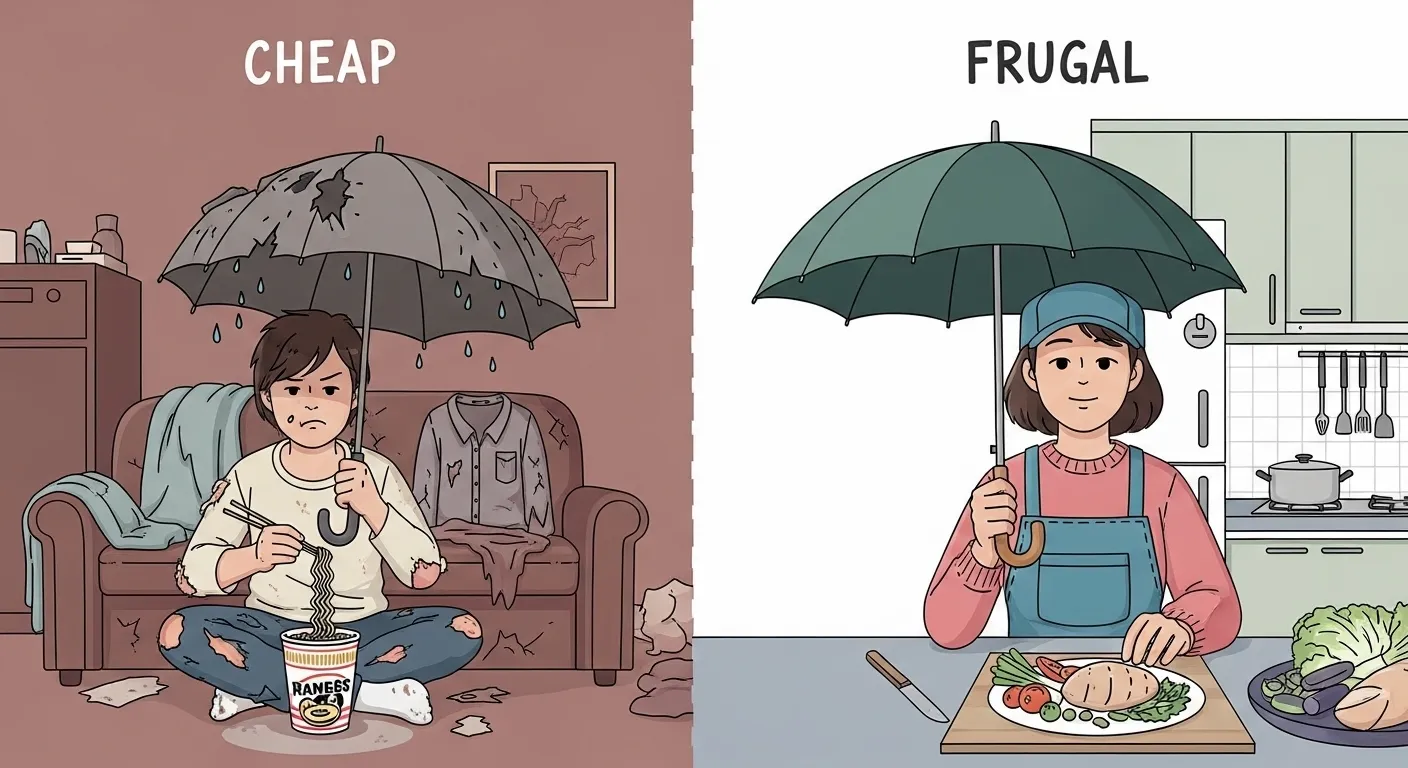
Last weekend, Hamza and his friend Ali went out to buy a new phone charger. At the shop, Hamza picked the cheapest one he could find, even though it looked flimsy. Ali, on the other hand, spent a little more on a durable, branded charger with a warranty.
A week later, Hamza’s charger stopped working, and he had to buy another one. Ali’s charger? Still working perfectly.
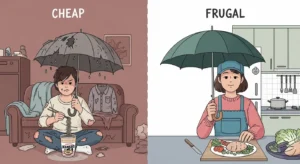
That moment highlights a common confusion: being cheap vs being frugal. Both involve saving money, but the mindset and long-term results are completely different. Understanding this difference can help you make smarter financial decisions and avoid costly mistakes.
Quick Answer
- Cheap means spending as little money as possible, often sacrificing quality or value.
- Frugal means spending wisely getting the best value for your money.
In short, cheap focuses on price, while frugal focuses on value.
What Does “Cheap” Mean?
Being cheap is about minimizing cost at all times, even if it leads to poor outcomes.
Key Traits of Cheap Behavior:
- Chooses the lowest price regardless of quality
- Avoids spending even when necessary
- Focuses on short-term savings
- May ignore long-term consequences
Real-World Example:
Buying very low-quality shoes because they’re cheaper, even though they wear out in a month and need replacing.
What Does “Frugal” Mean?
Being frugal is about making thoughtful, value-driven decisions with money.
Key Traits of Frugal Behavior:
- Look for the best value (quality + price)
- Spends intentionally, not impulsively
- Focuses on long-term savings
- Avoids waste, not necessary to spend
Real-World Example:
Buying a slightly more expensive but durable pair of shoes that lasts for years, saving money over time.
Cheap vs Frugal: Key Differences
| Feature | Cheap | Frugal |
| Focus | Lowest price | Best value |
| Mindset | Avoid spending | Spend wisely |
| Quality Consideration | Often ignored | Carefully evaluated |
| Long-Term Impact | Can lead to higher costs | Saves money over time |
| Decision Style | Short-term thinking | Long-term thinking |
| Example | Buying cheapest item repeatedly | Buying durable item once |
Why People Confuse Cheap and Frugal
The confusion exists because both involve saving money. However:
- Cheap = saving now, losing later
- Frugal = saving smartly over time
Many people think avoiding spending is always good, but in reality, it can backfire.
When to Be Cheap vs Frugal
When Being Cheap Might Make Sense:
- For disposable or one-time-use items
- When trying something temporarily
- When quality doesn’t matter much
When Being Frugal is Better:
- For long-term purchases (electronics, clothes, appliances)
- When quality affects safety or durability
- When you want to reduce overall expenses over time
Pros and Cons of Being Cheap
Advantages:
- Immediate savings
- Useful for tight budgets
- Works for short-term needs
Disadvantages:
- Poor quality products
- Frequent replacements
- Can damage relationships (e.g., splitting bills unfairly)
Pros and Cons of Being Frugal
Advantages:
- Better financial health
- Higher-quality purchases
- Long-term savings
- More sustainable lifestyle
Disadvantages:
- Requires time and research
- Sometimes higher upfront cost
- Can feel restrictive if overdone
Real-Life Scenarios
Scenario 1: Grocery Shopping
- Cheap: Buying the lowest-quality food to save money
- Frugal: Buying nutritious food in bulk at a discount
Scenario 2: Travel
- Cheap: Booking unsafe or uncomfortable options just to save money
- Frugal: Finding deals on safe, comfortable travel options
Scenario 3: Home Appliances
- Cheap: Buying a low-cost fan that breaks quickly
- Frugal: Investing in a reliable fan that lasts for years
Psychological Difference
The real difference lies in mindset:
- Cheap mindset: Fear of spending money
- Frugal mindset: Control over spending money
Frugal people see money as a tool, while cheap behavior often comes from anxiety about losing money.
How to Shift from Cheap to Frugal
If you want to improve your financial habits:
1. Think Long-Term
Ask: Will this save me money over time?
2. Focus on Value
Consider quality, durability, and usefulness not just price.
3. Avoid False Savings
Cheap deals that lead to repeated purchases aren’t real savings.
4. Budget Smartly
Plan your spending instead of avoiding it entirely.
Internal Linking Suggestions
For a finance or lifestyle blog, link this topic to:
- “Difference Between Saving and Investing”
- “How to Build Smart Money Habits”
- “Budgeting Tips for Beginners”
- “Minimalism vs Frugality”
FAQs
1. Is being cheap a bad thing?
Not always, but it can lead to poor decisions if it sacrifices quality or value.
2. Is frugal the same as stingy?
No. Frugal people spend wisely, while stingy people avoid spending even when necessary.
3. Can you be both cheap and frugal?
Sometimes, but generally, frugality is the healthier financial approach.
4. Does frugal mean spending more money?
Not necessarily. It means spending smarter, which can sometimes mean paying more up front.
5. Which is better: cheap or frugal?
Frugal is usually better because it focuses on long-term value and financial stability.
Conclusion
The difference between cheap and frugal comes down to mindset and long-term impact. Being cheap is about cutting costs at any expense, while being frugal is about making smart, intentional decisions with your money.
If you want better financial outcomes, aim to be frugal, not cheap. It’s not about spending less it’s about spending wisely.